
Side Dishes
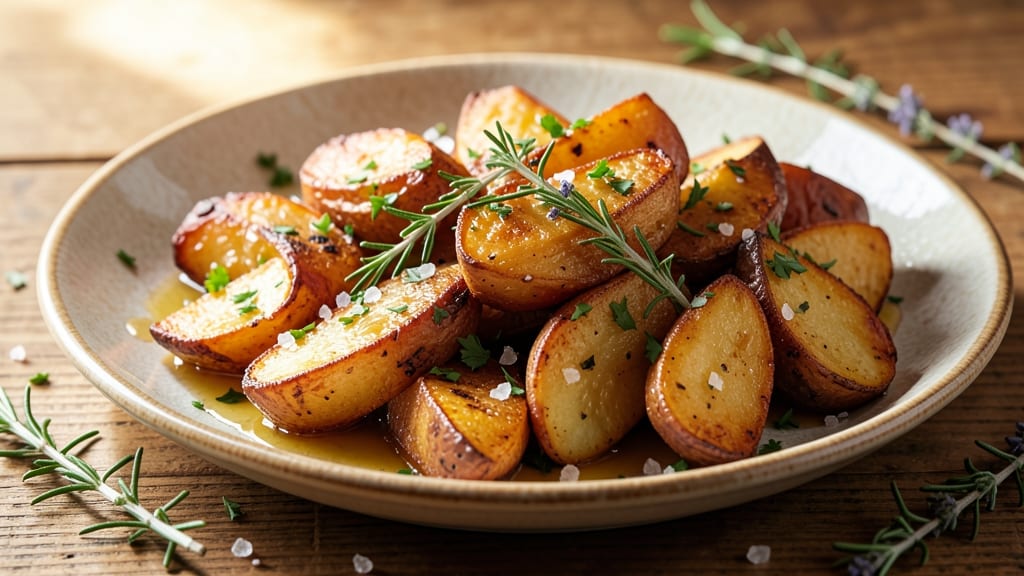
This banquet potatoes recipe delivers restaurant-worthy sides that transform simple spuds into a showstopping centerpiece for any table. The secret lies in a crispy caramelized vinegar crust paired with fragrant herb-infused roasting—technique that elevates humble potatoes to foolproof crowd-pleaser status.
I perfected this during a holiday gathering when guests kept asking for seconds, and it hasn’t disappointed since.
The magic begins with parboiling the potatoes to create a tender interior while maintaining structure, then roasting them until golden. A simple vinegar reduction transforms into a sticky, sweet-savory crust that clings beautifully, while fresh herbs infuse every bite with bright, aromatic depth.
This method ensures perfectly crisp edges and creamy centers every time, even when scaling for large crowds.
What you’ll end up with is a platter of glossy, caramelized potatoes that look as impressive as they taste—ideal for holiday feasts, family dinners, or potlucks. The vinegar crust adds a sophisticated tang that balances rich main dishes, while the herb infusion keeps flavors vibrant.
Ready in under 60 minutes, this recipe delivers restaurant-quality results without the fuss.
Pair with roasted meats, grilled vegetables, or creamy sauces for a complete meal. The leftovers reheat beautifully, making it perfect for meal prep or feeding hungry guests. Here’s how to make them—professional results guaranteed.
Ingredients for banquet potatoes
Twelve ingredients transform ordinary potatoes into a restaurant-worthy centerpiece.
| Ingredient | Amount | Notes |
|---|---|---|
| Russet Potatoes 🥔 | 6 lb | Large, uniform size for even cooking |
| White Wine Vinegar 🍷 | ½ cup | High-quality, aged variety preferred |
| Unsalted Butter 🧈 | ¾ cup | Cold, cubed for even melting |
| Fresh Rosemary 🌿 | ¼ cup | Finely chopped, stems removed |
| Fresh Thyme 🌿 | ¼ cup | Leaves only, finely chopped |
| Fresh Parsley 🌿 | ¼ cup | Flat-leaf, finely chopped |
| Granulated Sugar 🍚 | 2 tbsp | Fine grain for smooth texture |
| Kosher Salt 🧂 | 1 ½ tbsp | Diamond Crystal preferred |
| Ground Black Pepper 🌶️ | 1 tsp | Freshly cracked for depth |
| Extra-Virgin Olive Oil 🫒 | ¼ cup | For drizzling before roasting |
| Garlic Cloves 🧄 | 4 cloves | Minced for herb blend |
| Heavy Cream 🥛 | ¼ cup | Optional, for extra richness |
The Russet potatoes are the foundation—Idaho-grown or organic varieties from Whole Foods ensure consistent texture. For the vinegar, Bartles & Jaymes or a high-quality Italian balsamic vinegar adds complexity. Fresh herbs should be bright green with no wilting—grab them from the grocery store's produce section just before cooking. The butter matters too; Plugrá or Land O'Lakes cultured butter melts beautifully without overpowering. If scaling for larger crowds, Costco's Kirkland Signature potatoes work perfectly—they're uniform and stay crisp during roasting.
No white wine vinegar? Apple cider vinegar or red wine vinegar works in a pinch, though the flavor profile shifts slightly. Substitute dried herbs at one-third the amount, but fresh is ideal for that vibrant aroma. For a dairy-free version, omit the butter and heavy cream, increasing olive oil by 0.25 cup instead. The sugar can be reduced by half if you prefer less sweetness, though it balances the vinegar beautifully. If you're short on time, pre-minced garlic from a jar works, though fresh is always better. For a richer finish, add 0.25 cup grated Parmesan during the final minutes of roasting.
Store leftover potatoes in an airtight container for up to 5 days, though they reheat best when fresh. For make-ahead prep, parboil and refrigerate the potatoes up to 24 hours before roasting. Reheat in a 350°F oven for 10-15 minutes until crispy. These potatoes also freeze beautifully—portion into single servings before freezing for up to 3 months. The vinegar crust softens slightly upon reheating, so plan to crisp them again in the oven or under a broiler for a minute or two.
Why You'll Love This Recipe
- One-Pot Magic: I swear by this recipe when I’m too tired to wash extra dishes—just slice, roast, and toss. The vinegar and butter caramelize right in the pan, so you end up with golden edges and zero scrubbing.
- Herb-Packed Punch: That bright white wine vinegar cuts through the richness of the butter, while the rosemary and thyme? They infuse like a hug—earthy, fresh, and just sharp enough to make your taste buds notice.
- Leftovers That Don’t Suck: Honestly, these potatoes reheat like a dream—crispy on the outside, still tender inside. I’ve brought them to potlucks, packed them for lunch, and even microwaved them for my kid’s school lunch (yes, really).
- Budget Booster: Russets are cheap, and a single bunch of rosemary/thyme stretches across multiple meals. This recipe feeds four for under $5, and the flavor? It tricks everyone into thinking you slaved over it.
Step-by-step instructions for herb-infused roast potatoes
Master this technique and you'll transform simple russet potatoes into a showstopping centerpiece with crispy edges and aromatic herb layers.
Prepare and Parboil the Potatoes
Begin by scrubbing the 6 lb russet potatoes thoroughly under cold water to remove any dirt. Using a sharp chef's knife, cut them into 2-inch chunks, ensuring uniform size for even cooking. Place the potato pieces in a large stockpot and cover with cold water by about 2 inches.
Add the 1.5 tbsp kosher salt to the water and bring to a rolling boil over high heat. Once boiling, reduce heat to medium and let the potatoes simmer for 8-10 minutes until they're fork-tender but not falling apart. Drain immediately in a colander and return them to the pot. This parboiling step is crucial—it jumpstarts the cooking process and prevents uneven browning later.
Create the Herb Butter Mixture
While the potatoes are parboiling, prepare the herb butter by combining the 0.75 cup unsalted butter (cold and cubed), 0.25 cup fresh rosemary, 0.25 cup fresh thyme, 0.25 cup fresh parsley, 4 cloves minced garlic, and 1 tsp ground black pepper in a medium bowl. Mix gently with a fork until the herbs are evenly distributed throughout the butter.
This mixture will infuse the potatoes with complex herbal notes while creating a rich, golden crust. The cold butter ensures it melts gradually during roasting, coating each potato evenly. If you prefer extra richness, fold in the 0.25 cup heavy cream at this stage—it adds luxurious mouthfeel to the finished dish.
Toss and Season the Potatoes
Return the drained potatoes to the pot and let them cool slightly for 2-3 minutes. In a large bowl, combine the potatoes with the herb butter mixture, tossing gently but thoroughly to coat each piece completely. Transfer the potatoes to a rimmed baking sheet lined with aluminum foil, arranging them in a single layer without overlapping.
Drizzle the potatoes evenly with the 0.25 cup extra-virgin olive oil and sprinkle with the 2 tbsp granulated sugar. The sugar will caramelize during roasting, creating a subtle sweet contrast to the savory herbs. Toss once more to distribute the oil and sugar evenly. This step ensures maximum crispiness and depth of flavor throughout.
Roast for Maximum Crispiness
Preheat your oven to 425°F with the rack positioned in the middle position. Roast the potatoes for 35-40 minutes, stirring once halfway through the cooking time, until they develop a deep golden-brown crust. The potatoes should be tender when pierced with a fork, with crisp edges that give way to fluffy interiors.
During the final 10 minutes of roasting, pour the 0.5 cup white wine vinegar evenly over the potatoes. The acidity will react with the caramelized sugars, creating a glossy, tangy crust that adds another layer of complexity. Watch carefully—the vinegar will bubble vigorously as it heats, so position the baking sheet on the lower oven rack if needed to prevent overflow.
Rest and Serve Immediately
Remove the potatoes from the oven and transfer them to a serving platter. Let them rest for 5-10 minutes before serving—this allows the flavors to meld and prevents the crispy crust from breaking apart when handled. The potatoes should be piping hot with a perfect balance of crispy exteriors and fluffy centers.
Garnish with additional fresh parsley if desired, and serve immediately as a centerpiece for your banquet. These potatoes pair beautifully with roasted meats, rich sauces, or even as a standalone vegetarian main. The combination of herbal aromatics, caramelized crust, and tender interiors makes this dish truly exceptional for any gathering.
Pro Tips For Making Banquet Potatoes
- CUT THEM EVENLY: I learned this the hard way—uneven slices mean some potatoes steam while others burn. Use a mandoline or sharp knife to slice them all ¼-inch thick, no thicker, no thinner. If you’re freehanding, weigh them down with a plate after the first few cuts to keep pressure consistent.
- SALT THE WATER HARD: These potatoes need a 1.5 teaspoon salt per quart of water minimum—more if you’re using unsalted butter later. I used to skimp, and the flavor just didn’t carry through. Trust me, the vinegar and herbs won’t overpower; the potatoes will thank you with crisp edges and deep flavor.
- DON’T SKIP THE VINEGAR REST: After boiling, let the sliced potatoes soak in the ice bath with white wine vinegar for 10 minutes—yes, even if they’re still hot. This stops the cooking, sharpens the edges, and keeps them from turning gummy when you roast. I know it feels like a waste of time, but it’s the thing that makes them restaurant-quality.
- BROWN THE HERBS FIRST: Toss the fresh rosemary and thyme in a dry pan over medium heat for 30 seconds until fragrant. This releases their oils before you mix them with butter and vinegar. The flavor jumps off the plate—no more picking out bland stems or wondering why your potatoes taste like "herb light."
Storing and reheating your banquet potatoes
Refrigerator Storage
Store leftover banquet potatoes in an airtight container with a paper towel on top to absorb excess moisture. Keep them refrigerated for up to 5 days, though I recommend enjoying them within 3 days for peak crispiness.
The vinegar crust softens slightly over time, so plan to reheat them in the oven to restore that satisfying crunch. 🥔
Freezer Prep Tips
For long-term storage, portion the potatoes into single-serving airtight containers or freezer bags with all air removed. Label with the date and freeze for up to 3 months.
I like using quart-sized glass containers because they reheat more evenly than plastic. Let them thaw in the fridge overnight before reheating for best results. ❄️
Oven Reheating Method
Preheat your oven to 350°F and spread the chilled potatoes on a baking sheet lined with parchment paper. Reheat for 10-15 minutes until the edges are crispy again. For extra crunch, broil for 1-2 minutes at the end. The vinegar crust will re-crisp beautifully, restoring that restaurant-quality texture. 🔥
Microwave Shortcut
If you're short on time, cover the potatoes with a damp paper towel and microwave on 50% power for 2-3 minutes. Stir halfway through, then continue in 30-second bursts until heated through.
This method works best for reheating individual portions—just be prepared for slightly softer edges compared to oven reheating. ⏰
Crispy Edge Revival
For potatoes that lost their crispiness during storage, brush them lightly with melted butter or olive oil before reheating. Place them under a broiler for 1-2 minutes until golden brown again. This quick step makes all the difference when serving leftovers to guests who expect that perfect crunch. 💡
Make-Ahead Roasting
Parboil the potatoes up to 24 hours ahead and store them in the fridge. When ready to roast, proceed with the herb butter mixture and bake as directed. This shortcut saves time on busy days while ensuring you still get that coveted crispy crust.
The potatoes will reheat beautifully after roasting, making them ideal for meal prep. 📅
Nutrition facts
Frequently asked questions
Why do banquet potatoes need parboiling first?
Parboiling creates a tender interior while keeping the potatoes firm enough to develop that perfect crispy crust during roasting. Without this step, the potatoes would either turn mushy or stay undercooked. It also helps them hold their shape when tossed with the herb butter mixture.
Can I use sweet potatoes instead of russets?
While you can substitute sweet potatoes, they have a different texture and moisture content. For best results, stick with russets—they're starchier and create that ideal fluffy interior with crispy edges. If you must use sweet potatoes, reduce the roasting time by 5-7 minutes and add 1 extra tablespoon of sugar to enhance caramelization.
What if I don't have white wine vinegar?
Apple cider vinegar or red wine vinegar work well as substitutes, though the flavor profile will shift slightly. For a similar tangy-sweet balance, mix 0.25 cup apple cider vinegar with 1 teaspoon honey. Avoid balsamic vinegar—it's too thick and will create a sticky mess when poured over hot potatoes.
How do I prevent the potatoes from sticking to the baking sheet?
Line your baking sheet with heavy-duty aluminum foil and use a high-quality nonstick spray or 0.25 cup olive oil generously. Arrange the potatoes in a single layer without overlapping. If they still stick, the oven isn't hot enough—wait until it reaches 425°F before adding them.
Can I make this recipe in a slow cooker?
Not recommended for this specific recipe—the slow cooker won't create the crispy crust that makes these potatoes special. For a similar herb-infused potato dish, try a slow-cooker version of scalloped potatoes instead. This roasting method relies on high heat and direct contact with the baking sheet for that perfect texture.