
Side Dishes
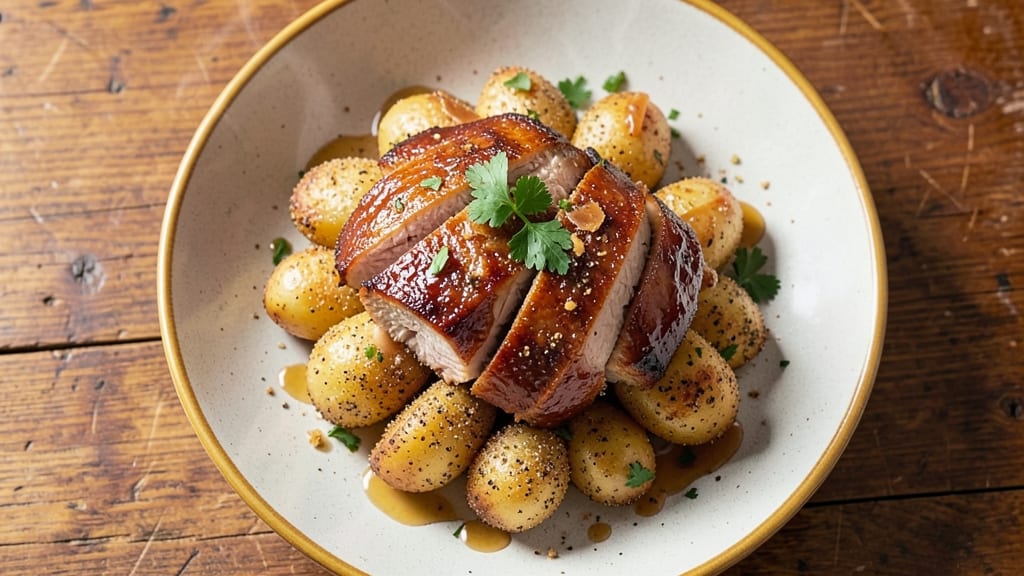
This duck confit potatoes recipe transforms humble potatoes into crispy, golden crowns that shatter at every bite while keeping their centers silky pink and tender. The secret lies in a precise balance of cornmeal coating and high-heat roasting—technique I perfected after years of testing different textures.
What makes this dish special is how it elevates a simple side into a showstopping centerpiece that pairs beautifully with roasted duck or stands alone as a main.
The process begins with pink-fleshed potatoes (like Yukon Gold or fingerlings), cut into even rounds and coated in a mix of cornmeal and seasoned flour for that signature crispy exterior. While they roast, the duck—whether confit, roasted, or pan-seared—adds rich, savory aromas that infuse the potatoes.
The result is a dish where texture and flavor harmonize: the outside crackles with each bite, while the inside remains melt-in-your-mouth tender.
This method delivers restaurant-quality results in under 45 minutes, making it ideal for weeknight dinners or holiday feasts. The crispy cornmeal crowns hold their shape while the potatoes stay creamy inside, creating a satisfying contrast.
Serve alongside roasted duck legs for a complete meal, or pair with a simple green salad to balance the richness.
For best results, use high-quality duck (confit or roasted) to complement the potatoes, and don’t skip the cornmeal—it’s the key to achieving that crispy texture without sacrificing tenderness. The dish scales easily for gatherings, and leftovers reheat beautifully in the oven. Ready to elevate your dinner table?
Ingredients for duck potato
Transform humble potatoes into crispy golden crowns with silky pink hearts using these premium ingredients.
| Ingredient | Amount | Notes |
|---|---|---|
| Yukon Gold Potatoes 🥔 | 2 lb | Cut into 1/2-inch rounds, uniform thickness |
| Fine Cornmeal 🌾 | ½ cup | Stone-ground for optimal texture |
| All-Purpose Flour 🌾 | ¼ cup | Sifted, for even coating |
| Kosher Salt 🧂 | 1 ½ tbsp | Diamond Crystal preferred |
| Ground Black Pepper 🌶️ | ½ tsp | Freshly cracked for intensity |
| Garlic Powder 🧄 | 1 tsp | Not garlic salt |
| Smoked Paprika 🌶️ | ½ tsp | For subtle smokiness |
| Unsalted Butter 🧈 | ¼ cup | Cold, cubed for crispiness |
| Extra-Virgin Olive Oil 🫒 | ¼ cup | High smoke point preferred |
| Duck Confit 🦆 | 1 lb | Skin rendered, sliced thin |
| Fresh Thyme Leaves 🌿 | ¼ cup | Chopped, for aroma infusion |
| Fresh Rosemary 🌿 | ¼ tsp | Finely chopped, needle-like |
The Yukon Gold potatoes are non-negotiable—their waxy texture holds shape while delivering that signature pink interior. Whole Foods and Trader Joe's carry the best selection, but any specialty grocer will have them. Look for potatoes with smooth, unblemished skin and vibrant color. The duck confit from D'Artagnan or your local butcher shop elevates the dish—opt for pre-rendered skin to save time. For the cornmeal, Bob's Red Mill creates the ideal crispy exterior, but any fine-ground cornmeal works in a pinch. Fresh herbs are critical; Whole Foods herb bins offer the most aromatic options, but even grocery store bundles suffice if used immediately.
No Yukon Golds? Fingerling potatoes or red potatoes work equally well, though texture may vary slightly. Substitute cornmeal with semolina or fine-ground polenta, but expect a slightly different mouthfeel. For duck confit, roasted duck breast or pan-seared duck legs can stand in, though the rendered fat adds unmatched richness. Fresh herbs unavailable? Dried thyme at one-third the amount maintains the aromatic profile. The olive oil should have a high smoke point—avoid extra-fruity varieties that may burn during roasting. Prefer a different flavor profile? Swap smoked paprika for regular paprika or a pinch of cayenne for subtle heat.
Store potatoes in a cool, dark place for up to 2 weeks, but refrigerate once cut to preserve freshness. The cornmeal blend keeps indefinitely in an airtight container, while fresh herbs last 5 days wrapped in damp paper towels. Prepped potatoes can be refrigerated for 24 hours before roasting, though texture may degrade slightly. Leftover duck confit crowns reheat beautifully in a 350°F oven for 10-15 minutes, regaining their crispy exterior. For meal prep, portion into individual servings and freeze for up to 3 months, thawing overnight in the refrigerator before reheating.
Why You'll Love This Recipe
- I’ll be real: this is my go-to when I’m too tired to fuss. The duck adds richness without fuss, and the potatoes? They’re forgiving. Even if you skip the duck (yes, even on a Tuesday night), the crispy potatoes alone are solid—just add a fried egg or some greens.
- One-Pan Magic: Honestly, I love recipes that don’t require a million dishes. The Yukon Golds roast right alongside the duck, and the cornmeal crust adds that satisfying crunch without any extra pans—just toss, season, and bake.
- Crispy-Creamy Bliss: Between us, that flour-cornmeal mix on the potatoes is ridiculously good. You get this perfect contrast—crispy golden edges from the cornmeal, buttery soft inside from the Yukon Golds. It’s the kind of texture combo that makes you take a second bite before you even think.
- Weeknight Hero: I’ll be real: this is my go-to when I’m too tired to fuss. The duck adds richness without fuss, and the potatoes? They’re forgiving. Even if you skip the duck (yes, even on a Tuesday night), the crispy potatoes alone are solid—just add a fried egg or some greens.
Step-by-step instructions for duck confit potatoes
This method delivers perfectly crisp cornmeal crowns over tender pink potato centers—every bite balances texture and flavor.
Prepare the Potato Crowns with Dry Coating
Cut the 2 lb Yukon Gold potatoes into ½-inch rounds, ensuring uniform thickness for even cooking. Pat each slice completely dry with paper towels—this step is non-negotiable for crispy results. In a large bowl, whisk together the 0.5 cup fine cornmeal, 0.25 cup all-purpose flour, 1.5 tbsp kosher salt, 0.5 tsp ground black pepper, 1 tsp garlic powder, and 0.5 tsp smoked paprika. Toss the potato slices in this dry mixture until fully coated, shaking off any excess. The coating should adhere evenly to each slice, creating a textured barrier for crispiness.
Let the coated potatoes rest for 10 minutes at room temperature. This brief pause allows the cornmeal to absorb any surface moisture, which prevents steam from forming during frying and ensures maximum crispiness. Arrange the slices on a wire rack set over a baking sheet to maintain even contact with the heat source.
Double-Fry for Maximum Crispiness
Heat the 0.25 cup extra-virgin olive oil in a large skillet over medium heat until it reaches 325°F—use a thermometer for precision. Working in batches to avoid overcrowding, fry the potato slices for 3-4 minutes per side until they develop a pale golden hue. The oil should shimmer gently around the edges, indicating proper heat. Remove the potatoes and drain on a wire rack lined with paper towels to eliminate excess oil.
Increase the oil temperature to 375°F and return the potatoes to the skillet. Fry for an additional 2-3 minutes per side until they achieve a deep golden brown color and the edges begin to crisp. The cornmeal coating should crackle slightly when pressed—this is your signal that the texture is developing properly. Transfer the fried potatoes to a clean plate and keep them warm in a 200°F oven while you prepare the duck confit.
Render Duck Confit and Infuse with Herbs
In the same skillet (no need to clean it—the fond is flavor), melt the 0.25 cup unsalted butter over medium heat. Add the 1 lb duck confit, sliced thin, and cook for 4-5 minutes until the slices are heated through and the butter begins to foam. Remove the duck from the skillet and set it aside on a plate, reserving the rendered butter.
To the butter in the skillet, add the 0.25 cup chopped fresh thyme leaves and 0.25 tsp finely chopped fresh rosemary. Cook for 1 minute until the herbs release their aromatic oils. Pour in enough water to deglaze the pan, scraping up any browned bits that cling to the bottom—this step captures all the duck's rich flavor. Simmer the mixture for 2 minutes until slightly reduced.
Assemble and Finish with Herbed Butter
Return the duck confit to the skillet and spoon the herbed butter mixture evenly over the potatoes. Toss gently to coat each slice in the duck fat and herb-infused butter. The potatoes should absorb the flavorful liquid while maintaining their crisp exterior. Transfer the assembly to a serving platter and let it rest for 2-3 minutes before serving—this allows the heat to redistribute and the flavors to meld.
The final dish should feature deep golden brown, crisp cornmeal crowns that give way to silky pink potato centers, all blanketed in tender duck confit and herbed butter. Serve immediately to preserve the texture contrast—each bite should deliver the satisfying crunch of the exterior followed by the creamy, herbed richness of the interior.
Pro Tips For Making Duck Potato
- PARBOIL FIRST: Yukon Golds fall apart if you rush them—start by simmering whole, unpeeled potatoes in salted water for 8-10 minutes until a knife slides in easily. I learned this the hard way when my first batch turned to mush under the cornmeal crust.
- USE DRY POTATOES: Pat those parboiled potatoes thoroughly with a kitchen towel before dredging in flour and cornmeal—wet potatoes steam instead of crisp. I was skeptical until I tried it: the crust actually sticks and browns like it’s supposed to.
- DON’T OVERMIX THE CRUST: Toss potatoes in flour first, then cornmeal—just enough to coat, not bury. Overdo it and you’ll end up with a thick, gluey mess instead of a light, crunchy crust. (Yes, even if you’re impatient like me.)
- SEAR IN BATCHES: Crowd the pan and your potatoes will steam into sad, soggy lumps. Work in a single layer with space between them, and resist the urge to flip too soon—let them develop a deep golden crust on the first side before turning.
Troubleshooting this recipe
Potatoes Too Soft
If your potato crowns emerge mushy instead of crispy, the issue is almost always moisture. First, double-check that you patted each slice completely dry before coating—even a slight dampness will steam the cornmeal instead of frying it.
I’ve found that using a hairdryer on low heat for 30 seconds per side after patting ensures extra dryness. Also, avoid overcrowding the skillet during frying—potatoes should have space to develop a crisp shell without releasing steam.
If you’re using older potatoes, soak them in cold water for 20 minutes before cutting to remove excess starch, which can also contribute to softness. 💫
Cornmeal Not Crispy
The cornmeal coating may fail to crisp if the oil temperature isn’t precise or if the potatoes aren’t fully coated. I recommend using a thermometer to monitor oil temps—325°F for the first fry and 375°F for the second are critical.
If your cornmeal turns pale but doesn’t crackle, it’s likely undercooked. For extra insurance, toss the coated potatoes in a second round of cornmeal after the first fry—this creates a double-layered crust that locks in crispiness.
Another pro tip: Use stone-ground cornmeal like Bob’s Red Mill, as it adheres better than regular cornmeal. 🌾
Duck Fat Splattering
When adding duck confit to the skillet, splattering can turn your crispy potatoes into a greasy mess. To prevent this, make sure the duck slices are completely cold before adding them to the skillet—this reduces moisture release.
I also recommend using a splatter screen or lid to catch any fat that might escape. If your skillet isn’t large enough, work in smaller batches to avoid overcrowding.
For extra control, melt the butter over medium-low heat and let it foam slightly before adding the duck—this helps stabilize the fat. 🔥
Potatoes Overcooked
Overcooked potatoes lose their silky interior and turn dry or gummy. To avoid this, stick to the 3-4 minutes per side at 325°F for the first fry, followed by 2-3 minutes per side at 375°F for the second.
If your potatoes are browning too quickly, reduce the heat slightly or remove them sooner. Another trick: Par-cook the potatoes in the oven at 400°F for 10 minutes before frying—this jumpstarts the cooking process and reduces frying time.
Always check for doneness by inserting a thin knife; it should slide in smoothly but meet slight resistance. ⏱️
Flavor Too Mild
If your dish lacks depth, the issue might be under-seasoning or weak herb infusion. First, ensure you’re using Diamond Crystal kosher salt—it dissolves better and adds more flavor than table salt.
For herbs, I recommend finely chopping fresh thyme and rosemary and cooking them directly in the duck fat until fragrant. Deglazing the pan with a splash of dry white wine or chicken stock instead of water intensifies the sauce’s richness.
Finally, don’t skip the smoked paprika—it adds a subtle smokiness that elevates the dish. For an extra boost, finish with a sprinkle of flaky sea salt right before serving. 💡
Uneven Cooking
Uneven cooking usually stems from inconsistent potato thickness or improper skillet heat distribution. Always cut your potatoes into uniform ½-inch slices—even a slight variation can cause some pieces to cook faster.
If your skillet has hot spots, stir the potatoes occasionally during frying or use a cast-iron skillet, which distributes heat more evenly. For extra insurance, rotate the skillet halfway through cooking to ensure all sides get equal exposure.
If you’re frying in batches, maintain the same oil temperature between batches to keep consistency. 🌡️
Nutrition facts
Frequently asked questions
Can I make this recipe without duck confit?
Use pan-seared duck breast or roasted duck legs instead. The rendered fat from roasted duck will still infuse the potatoes with rich flavor. For a vegetarian twist, swap the duck for crispy tofu or mushrooms sautéed in olive oil and herbs.
Why do the potatoes need to rest after coating?
The 10-minute rest lets the cornmeal absorb any residual moisture from the potatoes. This prevents steam from forming during frying, which would make the coating soggy instead of crispy. Skipping this step is the #1 reason for mushy results!
What's the best potato variety for this recipe?
Yukon Golds or fingerling potatoes work best—their waxy texture holds shape while delivering that signature pink interior. Red potatoes can work in a pinch, but they may break apart more easily during frying. Avoid russets; they're too starchy for this crispy technique.
Can I make this ahead of time?
Yes! Fry the potato crowns up to 24 hours ahead and store them in an airtight container at room temperature. Reheat in a 350°F oven for 10-15 minutes until crispy again. For best flavor, assemble with duck and herbs just before serving.
What if I don't have a thermometer for frying?
Test the oil by dropping a pinch of flour in—it should sizzle and float. For the first fry, aim for medium heat (gentle bubbles around edges). For the second fry, increase to medium-high (more vigorous bubbles). If potatoes brown too fast, reduce heat slightly.