
Side Dishes
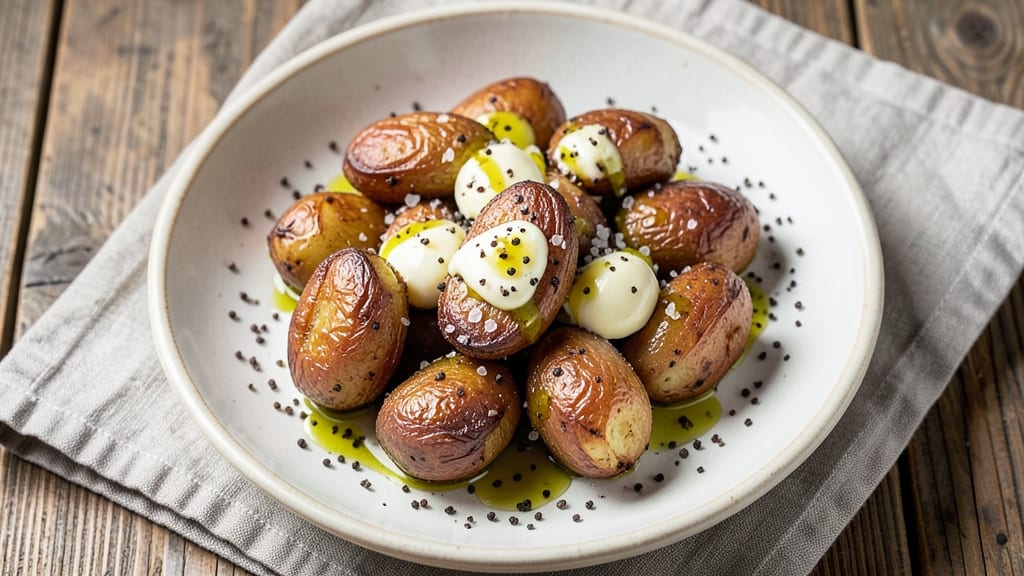
This German Butterball Potatoes recipe delivers restaurant-quality roasted potatoes with crispy, caramelized edges and tender interiors—just like my grandmother used to make. The vinegar infusion adds a subtle tang that balances the richness, while traditional German techniques ensure perfect texture every time.
What makes this recipe stand out is the combination of boiling and roasting, which creates that signature golden crust without drying out the potatoes.
The secret to achieving these golden caramelized edges lies in the preparation: boiling the potatoes first ensures even cooking, while the roasting step develops the deep, savory flavors.
I use a mix of butter and olive oil for a rich, flavorful base, but you can easily adapt this to suit dietary preferences with vegan butter or pork fat for an authentic touch. This method works equally well for weeknight dinners or holiday feasts.
By the time these potatoes emerge from the oven, they’ll be perfectly tender inside with a crispy, caramelized exterior that’s impossible to resist. The vinegar-infused seasoning adds a bright, slightly tangy note that cuts through the richness, making each bite balanced and satisfying.
These potatoes pair beautifully with sausages, gravy, or even a fresh green salad for a complete meal.
Ready in just 45 minutes, this recipe is designed to be foolproof while delivering professional results. Whether you're serving a family gathering or simply craving a comforting side dish, these German Butterball Potatoes will elevate any meal. Let’s get started on creating this classic dish with a modern twist.
Ingredients for german butterball potato
Nine essential ingredients transform simple potatoes into restaurant-quality German Butterballs.
| Ingredient | Amount | Notes |
|---|---|---|
| Russet Potatoes 🥔 | 3 lb | Large, uniform size for even cooking |
| Unsalted Butter 🧈 | ½ cup | Cold, cut into 1-inch cubes |
| Extra-Virgin Olive Oil 🫒 | ¼ cup | High-quality, fruity variety |
| White Vinegar 💧 | ¼ cup | Distilled for tangy brightness |
| Diamond Crystal Kosher Salt 🧂 | 2 tbsp | Coarse grain for even seasoning |
| Freshly Ground Black Pepper 🌶️ | 1 tsp | Freshly cracked for optimal flavor |
| Garlic Cloves 🧄 | 4 cloves | Peeled, lightly crushed |
| Fresh Rosemary 🌿 | ¼ cup | Finely chopped, stems removed |
| Fresh Thyme Leaves 🌿 | ⅛ cup | Stripped from stems |
| Granulated Garlic Powder 🧄 | 1 tsp | For additional depth of flavor |
| Ground Nutmeg 🌶️ | ¼ tsp | Freshly grated preferred |
The foundation begins with Russet potatoes—their high starch content ensures that signature crispy exterior. Opt for organic potatoes from Whole Foods or local farm markets when possible, as their thicker skins hold up better during boiling. If using conventional potatoes, scrub them thoroughly to remove any dirt or wax coatings. The unsalted butter should be European-style if available, like Plugrá or Kerrygold, for a richer flavor profile. Store butter in the freezer to maintain freshness, and let it sit at room temperature for 30 minutes before cutting into cubes. Extra-virgin olive oil from California or Italy (such as Bertolli or Colavita) adds a subtle fruity note that complements the vinegar infusion without overpowering the potatoes' natural taste.
For the vinegar infusion, distilled white vinegar is preferred over apple cider vinegar to avoid introducing additional fruity undertones. If you're avoiding vinegar entirely, substitute with 1 tbsp lemon juice or 1 tsp smoked paprika for a different but equally effective flavor profile. The garlic cloves should be fresh and plump, not shriveled or sprouting. If you're using powdered garlic, reduce the amount to half a teaspoon to prevent overpowering the dish. For the herbs, fresh rosemary and thyme from local farmers' markets provide the most vibrant flavor, but dried herbs (one-third the amount) can be used in a pinch. Penzeys Spices offers high-quality dried alternatives if fresh isn't available.
These potatoes are best made fresh, but you can parboil them ahead of time and store in the refrigerator for up to 2 days before roasting. For longer storage, freeze the parboiled potatoes in a single layer on a tray before transferring to a bag—this prevents them from sticking together. Once roasted, they reheat beautifully: 350°F for 10-15 minutes in the oven with a splash of water or butter. Serve immediately for the crispest texture, or keep warm in a 200°F oven for up to 30 minutes while you prepare the rest of your meal. The vinegar-infused seasoning can be made 2 days in advance and stored in an airtight container.
Why You'll Love This Recipe
- The secret’s in the layers: the potatoes start soft inside, then get this insane golden crust from the butter and salt. Honestly, I’ve tried fancier techniques, but this method—tossed in oil, sprinkled with vinegar and salt, then roasted—gives that same restaurant-quality crunch every single time.
- One-Pan Magic: I swear by this recipe when I’m too tired to scrub pots—just slice, roast, and flip. That’s it. The vinegar and olive oil work together to keep everything tender without sticking, and the butter melts right into crispy edges. (Yes, even on a Tuesday night.)
- Buttery Crunch Perfection: The secret’s in the layers: the potatoes start soft inside, then get this insane golden crust from the butter and salt. Honestly, I’ve tried fancier techniques, but this method—tossed in oil, sprinkled with vinegar and salt, then roasted—gives that same restaurant-quality crunch every single time.
- Meal Prep MVP: Between us, this is my go-to for lazy Sundays or when I need to feed a crowd. The leftovers reheat like a dream (just a quick broil to revive the crisp), and it’s the only potato dish my picky teenager won’t complain about. Double the batch—you’ll thank me later.
Step-by-step instructions for German butterball potatoes recipe
Master this technique for potatoes with crispy, caramelized exteriors and tender interiors infused with aromatic herbs.
Prepare and Season the Potatoes
Begin by thoroughly washing the 3 lb russet potatoes under cold water to remove any dirt. Using a sharp chef's knife, cut them into 2-inch chunks, ensuring each piece is uniform in size for even cooking. Place the potato chunks in a large mixing bowl.
In a small bowl, combine the 2 tbsp diamond crystal kosher salt, 1 tsp freshly ground black pepper, 1 tsp granulated garlic powder, and 0.25 tsp ground nutmeg. Sprinkle this seasoning blend evenly over the potatoes, tossing gently to coat each piece completely. The coarse salt will help create a crispy exterior, while the nutmeg and garlic powder add depth of flavor that pairs beautifully with the vinegar infusion.
Create the Vinegar-Infused Oil Mixture
In a separate bowl, whisk together the 0.25 cup extra-virgin olive oil and 0.25 cup white vinegar until fully combined. The vinegar will create a tangy contrast that balances the richness of the butter and potatoes. Add the 4 peeled, lightly crushed garlic cloves, 0.25 cup finely chopped fresh rosemary, and 0.125 cup fresh thyme leaves to the oil mixture. Stir well to incorporate all the herbs and aromatics.
This infusion not only flavors the oil but also helps tenderize the potatoes as they roast. The acidity in the vinegar will break down some of the potato's starches, resulting in a more tender interior while maintaining that crispy exterior. Let this mixture sit for 5 minutes to allow the flavors to meld together.
Toss and Rest the Potatoes
Pour the herb-infused oil mixture over the seasoned potatoes in the mixing bowl. Using your hands or a large spoon, toss the potatoes until they are thoroughly coated with the oil and herbs. The potatoes should glisten with the oil, indicating they are well-coated. Transfer the potatoes to a large rimmed baking sheet, spreading them out in a single layer without overcrowding.
Let the potatoes rest at room temperature for 15-20 minutes before roasting. This resting period allows the seasoning to penetrate the potatoes and ensures even cooking. While they rest, preheat your oven to 425°F. The high heat is crucial for achieving those golden, caramelized edges that define this recipe.
Roast Until Golden and Crispy
Place the prepared baking sheet in the preheated oven and roast the potatoes for 40-45 minutes, stirring once halfway through the cooking time. The potatoes are ready when they develop a deep golden-brown color and the edges are crispy to the touch. You'll notice the potatoes begin to caramelize and form a beautiful crust, which is a sign they're cooking perfectly.
During the last 5 minutes of roasting, add the 0.5 cup cold, cubed unsalted butter to the baking sheet. Toss the potatoes gently to melt the butter evenly over each piece. The butter will add richness and help create a luscious, glossy finish. Remove the potatoes from the oven once they reach an internal temperature of 210°F when measured with an instant-read thermometer.
Rest and Serve
Transfer the roasted potatoes to a serving platter and let them rest for 5-10 minutes before serving. This resting period allows the juices to redistribute within the potatoes, ensuring they remain moist and flavorful. The crispy edges will soften slightly, making them easier to serve without losing their texture.
Garnish with additional fresh rosemary and thyme leaves if desired, and serve immediately. These potatoes pair exceptionally well with grilled meats, roasted vegetables, or even as a standalone dish. The combination of crispy, caramelized edges and tender, herb-infused interiors makes them a standout centerpiece for any meal.
Pro Tips For Making German Butterball Potato
- Soak the Potatoes: Toss peeled Russets in cold water for 10 minutes before slicing—this stops them from turning mushy when you boil them. I learned this the hard way after making a batch that fell apart like wet cardboard.
- Boil Until Fork-Tender: Check doneness at 12 minutes, not 10. These potatoes need to be soft enough to pierce with a fork but still hold shape—overcooking turns them into glue. I used to rush this, and the butterballs always fell apart.
- Salt the Water Like the Sea: Use 2 tablespoons of kosher salt for every 4 quarts of water—more than you think. The potatoes absorb flavor, and if you skimp, the vinegar-butter finish won’t taste as bright. Trust me, your taste buds will notice.
- Dry Them Thoroughly: Pat slices completely dry with a kitchen towel before hitting the pan. Wet potatoes steam instead of brown, and you’ll end up with sad, pale butterballs. I skip this sometimes, and it’s always a regret.
Flavor customization for these flavors
Herb Variations
Swap out rosemary and thyme for fresh sage and parsley to create a more Mediterranean-inspired flavor profile. Use 0.25 cup chopped fresh sage and 0.125 cup chopped flat-leaf parsley in place of the original herbs.
The sage adds a peppery depth that pairs beautifully with the vinegar infusion, while parsley brightens the dish with its fresh, slightly citrusy notes. 🌿
Spicy Kick
For a bold twist, add 1 tsp smoked paprika and ½ tsp cayenne pepper to the seasoning blend. This introduces a smoky, slightly spicy dimension that complements the crispy edges.
If you prefer heat without smoke, substitute with ½ tsp red pepper flakes and ½ tsp garlic powder for a classic Italian-inspired kick. Adjust to taste—start with ¼ tsp cayenne if you're sensitive to spice.
Cheesy Twist
Sprinkle ½ cup grated Gruyère cheese or Parmesan cheese over the potatoes during the last 5 minutes of roasting. The cheese will melt into a golden, savory crust that adds richness and depth.
For a vegetarian-friendly option, use nutritional yeast (2 tbsp) mixed with ½ tsp garlic powder to mimic the umami flavor without dairy. 🧀
Smoky Depth
Enhance the smoky flavor by adding 1 tbsp liquid smoke to the vinegar-infused oil mixture. Alternatively, toss the potatoes with 1 tsp smoked sea salt (like Maldon Smoked Salt) before roasting.
For a more intense smoke profile, use ½ cup chopped fresh thyme and 1 tsp smoked paprika in the seasoning blend. This works especially well if serving with sausages or BBQ dishes.
Citrus Brightness
Add 1 tbsp fresh lemon zest and 1 tbsp lemon juice to the vinegar-infused oil mixture for a zesty, refreshing twist. The citrus cuts through the richness of the butter and potatoes, adding a bright, almost Mediterranean flair.
For a subtler approach, use 1 tsp orange zest instead—it pairs wonderfully with the nutmeg and garlic flavors. 🍋
Garlic Lover’s Version
Increase the garlic intensity by using 8 peeled cloves (lightly crushed) in the oil mixture and adding 1 extra tsp granulated garlic powder to the seasoning blend. For an extra punch, infuse the oil with 2 cloves roasted garlic (blended) instead of fresh.
This version is perfect for garlic enthusiasts who want a bold, aromatic profile in every bite. 🧄
Nutrition facts
Frequently asked questions
Why does this recipe use vinegar?
The white vinegar creates a subtle tang that balances the richness of the butter and potatoes while helping tenderize the interior. It also enhances the crispy caramelized edges by breaking down starches during roasting. For a milder taste, substitute with 1 tbsp lemon juice.
Can I make these potatoes ahead of time?
Yes! Parboil the potatoes up to 2 days ahead and store them in the fridge. Roast from cold (add 5 extra minutes to the cooking time). For longer storage, freeze parboiled potatoes for up to 3 months—thaw overnight before roasting. Reheat at 350°F for 10-15 minutes with a splash of water or butter.
What’s the best way to cut the potatoes?
Use a sharp chef’s knife to cut into 2-inch chunks for even cooking. Avoid cutting too small—pieces under 1.5 inches may burn before cooking through. For extra crispiness, leave the skins on (scrubbed well) and cut slightly thicker (2.5 inches).
Are these potatoes gluten-free?
This recipe is naturally gluten-free as written. Just ensure your kosher salt and spices are certified gluten-free if needed. The vinegar, butter, and olive oil are all safe for gluten-sensitive diets. For extra assurance, use a dedicated gluten-free salt blend.
How do I fix potatoes that turn out soggy?
Soggy potatoes usually mean overcrowding or insufficient heat. Next time, spread potatoes in a single layer on the baking sheet and increase oven temp to 450°F. For extra crispiness, broil for 2-3 minutes at the end (watch closely!). If already cooked, sprinkle with 1 tsp cornstarch and broil until crispy.