Side Dishes
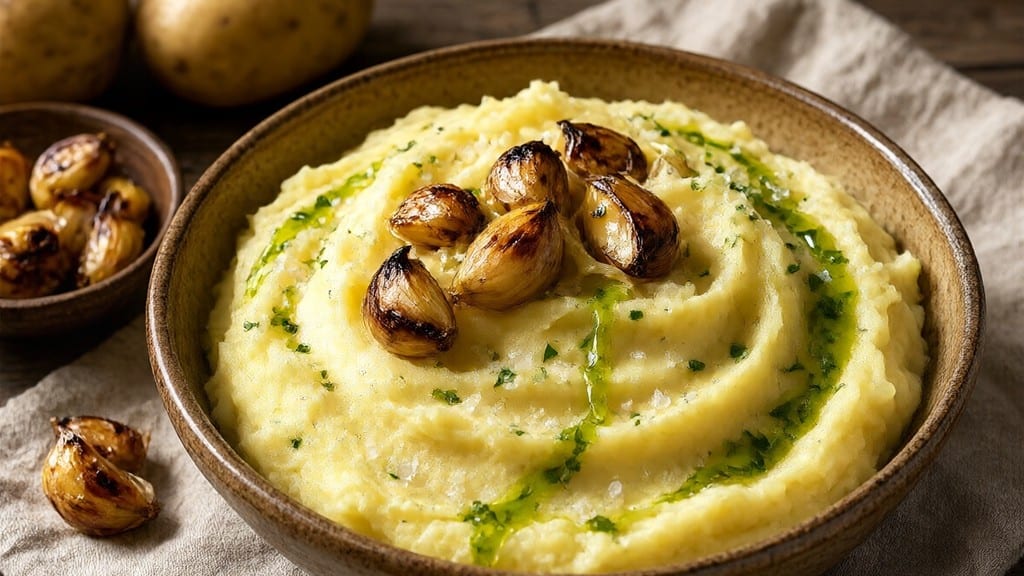
Creating creamy, no-dairy mashed potatoes that rival traditional versions requires the right substitutions and technique—and this recipe delivers both. The secret lies in roasted garlic for depth and a blend of plant-based milk and olive oil for that signature velvety texture.
After years of testing, I’ve perfected a method that eliminates dairy completely without sacrificing flavor or creaminess.
This recipe relies on simple, pantry-friendly ingredients like russet potatoes, unsweetened almond milk, and a touch of vegan butter for richness. The roasted garlic adds a savory complexity that transforms these into a side dish worthy of any table.
With just 20 minutes of active prep and 15 minutes of cooking, you’ll have a smooth, flavorful mash that’s impossible to resist.
The result is silky, lump-free mashed potatoes with a luxurious mouthfeel—no chalkiness or dryness in sight. The roasted garlic infuses every bite with a warm, aromatic sweetness, while the olive oil and plant-based milk create that classic creamy consistency.
Perfect for vegan diets, dairy allergies, or anyone craving a lighter take on a comfort classic.
Serve alongside roasted meats, grilled vegetables, or as a standalone dish with a sprinkle of fresh herbs. The technique here works for any occasion, from weeknight dinners to holiday feasts. Let’s get started on this foolproof, dairy-free masterpiece that even non-vegans will love.
Ingredients for mashed potatoes no dairy
Simple pantry staples transform into velvety, no-dairy mashed potatoes with roasted garlic's aromatic richness.
| Ingredient | Amount | Notes |
|---|---|---|
| Russet Potatoes 🥔 | 2 lb | Peeled and cut into even chunks |
| Unsweetened Almond Milk 🥛 | ¾ cup | High-quality, unsweetened variety |
| Vegan Butter 🧈 | ½ cup | Miyoko's or Earth Balance preferred |
| Extra-Virgin Olive Oil 🫒 | ¼ cup | High-quality, fruity flavor |
| Garlic Cloves 🧄 | 4 whole | Roasted with skins for depth |
| Sea Salt 🧂 | 1 ½ tsp | Diamond Crystal kosher salt |
| White Pepper 🌶️ | ½ tsp | Freshly ground for subtle heat |
| Nutritional Yeast 🍄 | 2 tbsp | For umami richness and cheesy flavor |
| Fresh Chives 🌿 | 2 tbsp | Finely chopped for garnish |
| Fresh Rosemary 🌿 | ½ tsp | Finely chopped for aromatic depth |
| Cold Water 💧 | ¼ cup | For adjusting texture |
The russet potatoes are non-negotiable here—their high starch content yields the creamiest texture. Buy organic russets if possible, as they tend to have fewer blemishes and hold their shape better during cooking. For the roasted garlic, leave the skins on and roast whole at 400°F for 45 minutes—this intensifies their sweetness and makes peeling effortless. Whole Foods Market or Trader Joe's carry excellent organic russets, and their bulk garlic section is ideal for this recipe. The almond milk should be unsweetened and preferably barista-style for a creamier consistency, but any high-quality brand works.
No almond milk? Oat milk or full-fat coconut milk are excellent substitutes—they add a subtle sweetness that complements the roasted garlic. Short on vegan butter? Olive oil or coconut oil can bridge the gap, though the texture will be slightly lighter. The nutritional yeast is a game-changer for that classic cheesy flavor without dairy. Bob's Red Mill or Bragg brands are widely available and offer the best quality. Fresh herbs like chives and rosemary can be swapped for dried at a 1:3 ratio, though fresh provides a brighter finish. For extra richness, add an extra tablespoon of olive oil or a splash of aquafaba (chickpea brine) for protein.
Store any leftovers in an airtight container in the refrigerator for up to 4 days, though they're best enjoyed fresh. Reheat gently in a saucepan with a splash of plant-based milk to restore creaminess. For meal prep, this recipe scales beautifully—double the batch and freeze half in portions. Mason jars are perfect for freezing; thaw overnight in the fridge before reheating. The roasted garlic can be prepped ahead and stored in the fridge for 3 days or frozen for 3 months, making this a truly efficient recipe for busy schedules.
Why You'll Love This Recipe
- No Boil-Over Chaos: I peel and chop potatoes while the oven preheats—no babysitting a pot on the stove. Russets break down perfectly with just olive oil and salt roasted in foil, so fluffy they practically mash themselves.
- Garlic Butter Bomb: That roasted garlic clove? It melts into the almond milk and vegan butter like a secret weapon. Rich, nutty, and just a hint of char—no dairy needed to make it irresistible.
- Leftovers That Last: Store them in the fridge for up to 5 days, and reheat with a splash of almond milk. They’ll still be creamy, not gluey, because the olive oil keeps them silky even after sitting.
- Budget-Friendly Luxury: Russets are cheap, and almond milk stretches further than heavy cream. For under $5, I feed four people a side that tastes like it cost twice as much—no guilt, just comfort.
Step-by-step instructions for silky no-dairy mashed potatoes
This method delivers restaurant-quality texture using only plant-based ingredients.
Roast the Garlic for Maximum Flavor
Preheat your oven to 375°F. Peel the 4 whole garlic cloves but leave their skins intact. Place them on a small piece of aluminum foil, drizzle with 1 teaspoon of the extra-virgin olive oil, and sprinkle lightly with 0.25 teaspoon of the sea salt. Fold the foil tightly to create a sealed packet.
Roast for 25-30 minutes until the garlic cloves are soft and golden brown, with caramelized edges. The skins should easily squeeze out when pressed. Let them cool slightly before squeezing out the roasted flesh directly into your mashed potatoes. This technique creates a deep, sweet garlic flavor that infuses the entire dish.
Cook the Potatoes to Perfect Doneness
Place the 2 lb russet potatoes in a large pot and cover them with 4 cups of cold water. Add 1 teaspoon of the sea salt and bring to a boil over high heat. Once boiling, reduce heat to medium-high and cook for 15-20 minutes until the potatoes are fork-tender.
To test doneness, pierce a potato with a fork or knife—it should slide in easily with no resistance. Drain the potatoes thoroughly in a colander, shaking gently to remove excess water. Return them to the pot and let them steam-dry for 2-3 minutes to ensure maximum creaminess in the final texture.
Mash with Plant-Based Fat and Liquid
Return the drained potatoes to the pot and add the 0.5 cup vegan butter and 0.25 cup extra-virgin olive oil. Mash roughly with a potato masher or wooden spoon, leaving some small lumps for texture. The combination of these fats creates a silky, velvety consistency that rivals traditional dairy-based mashed potatoes.
Gradually add the 0.75 cup unsweetened almond milk while continuing to mash, adding 1 tablespoon at a time until you achieve a smooth, creamy texture. If the mixture is too thick, add 1 tablespoon of cold water at a time. The goal is a light, airy consistency that coats the back of a spoon.
Season and Finish with Umami Depth
Add the roasted garlic flesh, 1.5 teaspoons of sea salt, 0.5 teaspoon of white pepper, 2 tablespoons of nutritional yeast, and 0.5 teaspoon of finely chopped fresh rosemary. The nutritional yeast adds a cheesy, umami richness that's essential for that classic mashed potato flavor profile. Mash everything together until fully incorporated and smooth.
Taste and adjust seasoning—you may need an additional pinch of salt or pepper to balance the flavors. For the final touch, stir in the 2 tablespoons of finely chopped fresh chives. Cover the pot and let the mashed potatoes rest for 5 minutes to allow the flavors to meld completely before serving.
Adjust Texture Before Serving
If the mashed potatoes are too thick after resting, stir in 1 tablespoon of cold water at a time until you reach your desired consistency. Conversely, if they're too thin, you can gently reheat them in a saucepan over low heat, stirring constantly, until they thicken slightly. The key is to maintain that perfect balance between smooth and slightly textured.
Serve immediately while still warm. The combination of roasted garlic, umami-rich nutritional yeast, and the velvety texture from the plant-based fats creates a dish that's rich, satisfying, and completely dairy-free. This method ensures every bite delivers that classic mashed potato experience without compromising on flavor or texture.
Pro Tips For Making Mashed Potatoes No Dairy
- BOIL POTATOES UNTIL TENDER: Russets need to be fork-tender, not mushy—test at 15 minutes, then drain. I learned this the hard way: overcooked potatoes turn to glue, even with almond milk. Aim for a knife sliding in like butter, not a fork fighting through.
- SALT THE WATER LIKE THE OCEAN: Skip the salt in the potatoes? Big mistake. Add 2 tablespoons of salt to the boiling water—it seasons the starch and balances the neutral almond milk. (Yes, even if your vegan butter is salted.)
- MASH WITH DRY POTATOES: Drain all the water, then let the hot potatoes sit in the pot for 2 minutes—steam dries the surface. This prevents gummy mash when you mix in almond milk. I was skeptical until I tried it: no more sad, sticky lumps.
- ROAST GARLIC FIRST: Raw garlic in vegan mash can taste harsh. Wrap 2-3 cloves in foil, roast at 400°F for 10 minutes, then blend into the almond milk before mixing. The sweetness cuts through the starch, and it’s way more forgiving than mincing. (Bonus: no garlic breath.)
Creative variations of these flavors
Global Comfort Twist
Transform these mashed potatoes into a global-inspired side by adding 1 teaspoon of smoked paprika and ½ teaspoon of ground cumin during the final seasoning step. This creates a smoky, Moroccan-inspired version that pairs beautifully with grilled meats or roasted vegetables.
For a Mexican flair, stir in ½ cup of black beans (mashed slightly) and top with avocado slices and lime zest. 🌍
Herb-Infused Variations
Swap out the rosemary and chives for other fresh herbs to match your meal. For a Mediterranean touch, use 1 tablespoon of finely chopped thyme and 1 teaspoon of dried oregano.
A French bistro vibe comes from adding 1 tablespoon of chopped tarragon and a pinch of black peppercorns. Always chop herbs finely to distribute their flavors evenly throughout the mash.
Spiced Sweet Potato Mash
Swap russet potatoes for 2 lb sweet potatoes, peeled and cubed. Roast them at 400°F for 25 minutes before boiling to deepen their natural sweetness. After mashing, fold in 1 teaspoon of cinnamon and ½ teaspoon of nutmeg for a spiced, autumnal twist.
This version works wonderfully as a dessert-like side or with savory dishes like roasted squash. 🍠
Creamy Cauliflower Addition
For a lighter, low-carb mash, blend 1 cup of steamed cauliflower florets into the finished potatoes. Start with half the cauliflower and adjust to taste—too much can make the texture grainy.
The cauliflower adds a subtle nutty flavor that complements the roasted garlic beautifully. This variation is perfect for those watching their carb intake but still craving creamy mashed potatoes. ✨
Umami Boosters
Elevate the dish with extra umami depth using 1 tablespoon of white miso paste or 1 teaspoon of soy sauce during the final seasoning step.
For a mushroom lovers' version, finely chop ½ cup of cremini mushrooms and sauté them in olive oil until golden before adding to the mash. These additions add complexity that makes the dish feel restaurant-worthy without dairy. 🍄
Texture Play: Rustic vs. Silky
For a rustic texture, use a potato ricer instead of a masher to create a fluffier, airier consistency. For an extra-silky version, blend half the mashed potatoes with an immersion blender before combining with the rest.
Both techniques work beautifully—choose based on your preferred mouthfeel. The rustic version pairs well with hearty stews, while the silky version complements delicate proteins like grilled fish. 🥔✨
Nutrition facts
Frequently asked questions
Can I use regular milk instead of almond milk in this no-dairy recipe?
The recipe relies on plant-based milk to keep it dairy-free, but you can use full-fat coconut milk for a richer texture or oat milk for a slightly sweeter profile. If you accidentally use dairy milk, the flavor won't be compromised, but it won't be vegan. The almond milk adds a neutral base that lets the roasted garlic shine.
Why does my no-dairy mash turn out gummy instead of creamy?
Gummy texture usually means the potatoes were overcooked or didn't drain enough water. Always boil until fork-tender (15-20 minutes) and drain thoroughly. For extra creaminess, add 1 tablespoon of olive oil or 1 tablespoon of cold water at a time while mashing. The vegan butter also helps achieve that silky consistency.
What's the best way to reheat leftover no-dairy mashed potatoes?
Reheat gently in a saucepan over low heat, stirring constantly and adding 1-2 tablespoons of plant-based milk to restore creaminess. Microwaving can make them watery—avoid this method. For best results, reheat only until warm, then let sit for 2 minutes before serving to allow flavors to meld.
Can I make this recipe without roasted garlic?
Yes! Use 2 cloves of fresh minced garlic or 1 teaspoon of garlic powder instead. Roasting intensifies the sweetness, but fresh garlic still adds great flavor. For extra depth, sauté the garlic in olive oil until golden before adding it to the mash. The nutritional yeast will still provide that cheesy umami note.
How do I make these mashed potatoes ahead of time?
Prepare the mash up to 2 days in advance and store in an airtight container in the fridge. Reheat with 1 tablespoon of plant-based milk per cup to restore creaminess. For freezing, portion into Mason jars or airtight containers and freeze for up to 3 months. Thaw overnight in the fridge before reheating.