
Side Dishes
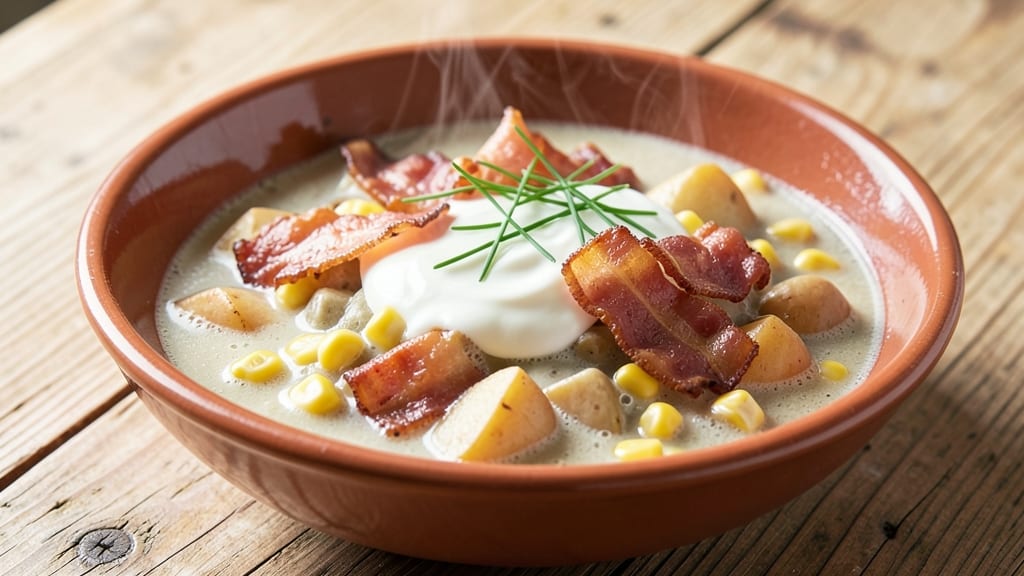
Pioneer woman Ree Drummond’s old-fashioned corn and potato chowder recipe delivers the kind of comforting, hearty meal that feels like a warm hug on a chilly evening.
The secret to its velvety texture lies in a classic roux base that thickens the broth just enough to create that signature creamy consistency without turning it gluey.
I’ve perfected this version to stay true to Pioneer Woman’s approach—rich, herbed, and packed with the kind of homestyle flavor that makes it worth simmering for nearly an hour.
The beauty of this chowder is in its simplicity: just a handful of fresh ingredients—potatoes, corn, onions, and bacon—simmered together until tender. The bacon adds a smoky depth that cuts through the creaminess, while fresh herbs like thyme and parsley elevate the dish from ordinary to extraordinary.
What makes it truly special is the slow simmer, which allows the flavors to meld into a harmonious blend that’s both comforting and sophisticated.
By the time it’s done, you’ll have a steaming bowl of chowder with tender potatoes, sweet corn, and a velvety broth that’s thick enough to coat a spoon but still light enough to let the ingredients shine.
The aroma alone will have everyone gathering around the table, and the first bite delivers that perfect balance of creamy, savory, and slightly sweet. This is the kind of dish that transforms an ordinary weeknight into a memorable meal.
Serve it with crusty bread for dipping or a simple green salad to balance the richness. The leftovers keep well in the refrigerator for up to four days, making it an ideal make-ahead meal for busy evenings.
Let’s get started on creating this timeless classic that’s sure to become a family favorite.
Ingredients for old fashioned corn and potato chowder recipe pioneer woman
Six core ingredients create Pioneer Woman's velvety chowder with smoky bacon and herbed richness.
| Ingredient | Amount | Notes |
|---|---|---|
| Bacon 🥓 | 8 oz | Thick-cut, chopped into small pieces |
| Yellow Onion 🧅 | 1 whole | Medium, diced into 1/4-inch pieces |
| Russet Potatoes 🥔 | 2 lb | Yukon gold or red potatoes work too |
| Sweet Corn 🌽 | 3 cups | Fresh kernels cut from cob or frozen |
| Heavy Cream 🥛 | 1 ½ cups | Full-fat for maximum creaminess |
| Whole Milk 🥛 | 1 cup | Warmed before adding to chowder |
| Chicken Broth 💧 | 4 cups | Low-sodium preferred for flavor balance |
| Unsalted Butter 🧈 | 4 tbsp | Cold, for perfect roux development |
| All-Purpose Flour 🌾 | 4 tbsp | For smooth, gluten-free roux substitute |
| Fresh Thyme 🌿 | ½ tsp | Dried thyme at 1/4 tsp works if needed |
| Fresh Parsley 🌿 | ¼ cup | Chopped, for garnish and freshness |
| Garlic Cloves 🧄 | 3 cloves | Minced for aromatic depth |
| Salt 🧂 | 1 ½ tsp | Adjust to taste, kosher preferred |
| Black Pepper 🌶️ | ½ tsp | Freshly ground for best flavor |
The bacon sets the foundation—thick-cut pieces render beautifully and infuse the chowder with smoky depth. Costco or Trader Joe's carry excellent thick-cut bacon in bulk, but any quality brand works. For the potatoes, Yukon golds provide a creamy texture, while russets hold up better during long simmering. The corn should be sweet and fresh; if using frozen, thaw it completely first. For the broth, Swanson or Pacific Foods low-sodium options are ideal—they won't overpower the delicate flavors. Fresh thyme and parsley elevate the dish, but dried herbs work in a pinch if you're short on time.
No bacon? Smoked paprika at 1/2 teaspoon adds similar depth, though it won't be as rich. Substituting butternut squash for half the potatoes gives a seasonal twist, while frozen corn cut from the cob works perfectly if fresh isn't available. For the roux, if you're avoiding gluten, cornstarch or arrowroot powder at the same ratio creates a smooth thickening. The heavy cream can be swapped for half-and-half or coconut milk for a lighter option, though the texture will differ slightly. Always warm the milk before adding it to prevent curdling in the chowder.
This chowder tastes even better the next day, so make a double batch and store leftovers in airtight containers for up to 4 days. For longer storage, freeze portions for up to 3 months. When reheating, warm gently over medium heat, stirring occasionally, to prevent the cream from separating. The bacon bits can be crisped up in a skillet before serving to add extra crunch. Garnish with fresh parsley just before serving to keep the vibrant color and fresh flavor intact.
Why You'll Love This Recipe
- Fewer Ingredients, Bigger Payoff: I swear by this recipe because it’s the kind of dish where you don’t need a pantry full of specialty items—just crispy bacon, thick-cut onions, and a handful of russets. The secret? Letting the potatoes soften low and slow while the corn gets tender in the same pot. No fancy techniques, just good old-fashioned simmering.
- Smoky Creamy Magic: That first spoonful of chowder—where the smoky bacon meets the velvety heavy cream and the sweetness of fresh corn—is like a hug in a bowl. The onions caramelize just enough to add depth without overpowering, and the cream ties it all together in a way that’s rich but never heavy.
- Weeknight to Potluck Hero: I make this for lazy Tuesdays when I don’t want to think, but it’s also the star of my holiday potlucks. The bacon makes it feel special, but the simplicity keeps it stress-free. Bring it to a gathering, and it’ll disappear faster than you can say “seconds, please.”
- Leftovers That Don’t Let You Down: Honestly, I almost always make extra because this chowder tastes even better the next day. The flavors meld even more, and the cream doesn’t separate if you reheat it gently. Plus, it’s budget-friendly—potatoes and corn stretch far, and bacon adds that wow factor without breaking the bank.
Step-by-step instructions for old-fashioned corn and potato chowder
Here's how to build a rich, velvety chowder with layers of smoky bacon flavor and tender vegetables.
Cook the Bacon and Sauté the Aromatics
In a large Dutch oven, cook the 8 oz bacon over medium heat until crispy and the fat has rendered, about 8-10 minutes. Remove the bacon with a slotted spoon and set aside, leaving the fat in the pot. This bacon fat becomes the flavor base for your chowder.
Reduce the heat to medium-low and add the 1 whole yellow onion, diced into ¼-inch pieces. Cook the onion for 5-6 minutes until softened and translucent. Add the 3 cloves garlic cloves, minced, and cook for another 30 seconds until fragrant. The garlic should sizzle gently without browning—this ensures sweetness rather than bitterness.
Create a Smooth Roux
Push the onions and garlic to one side of the pot. Add the 4 tbsp unsalted butter and 4 tbsp all-purpose flour, stirring continuously with a wooden spoon. Cook for 2-3 minutes until the mixture turns a light golden color, forming a smooth, thick paste. This roux will thicken your chowder and create that signature creamy texture.
Gradually whisk in the 4 cups chicken broth, ensuring no lumps form. Bring the mixture to a gentle simmer and let it cook for 3-4 minutes until it thickens slightly. This step builds the foundation for your chowder's rich, velvety consistency—don't rush it, as proper roux development is key to avoiding a gluey texture.
Add Potatoes and Simmer Until Tender
Peel and dice the 2 lb russet potatoes into ½-inch cubes. Add them to the Dutch oven and stir to coat evenly in the broth mixture. Bring everything back to a gentle simmer, then reduce the heat to low. Cover and let the potatoes cook for 12-15 minutes, stirring occasionally, until they're fork-tender and easily pierced with a knife.
Here's the thing—potatoes release starch as they cook, which naturally thickens the chowder. If the liquid looks too thin at this stage, don't worry; the cream and milk will add richness later. The potatoes should be soft but not falling apart, holding their shape while contributing to the chowder's hearty texture.
Incorporate Corn and Herbs
Add the 3 cups sweet corn (fresh or frozen) and the 0.5 tsp fresh thyme to the pot. Stir gently to combine, then increase the heat to medium-low. Simmer uncovered for 8-10 minutes until the corn is heated through and the flavors meld together. The corn should be tender but still retain a slight bite—overcooking turns it mushy.
Season with 1.5 tsp salt and 0.5 tsp black pepper, adjusting to taste. Stir in the reserved bacon, breaking it into smaller pieces to distribute evenly throughout the chowder. This is where all the flavors come together—the smoky bacon, sweet corn, earthy potatoes, and aromatic herbs create a harmonious blend that's both comforting and satisfying.
Finish with Cream and Milk for Ultimate Creaminess
Reduce the heat to low and gradually whisk in the 1.5 cups heavy cream and 1 cup whole milk. Warm the milk separately by heating it in a small saucepan over low heat until it's steaming but not boiling—this prevents the chowder from curdling when added. Stir the chowder constantly for 2-3 minutes until it reaches a smooth, creamy consistency.
Taste and adjust the seasoning if needed. The chowder should be rich and velvety, with a perfect balance of smoky, sweet, and savory flavors. For the final touch, stir in the 0.25 cup fresh parsley, chopped, just before serving. This herb adds a bright, fresh contrast to the deep, creamy base. Serve immediately, garnished with additional bacon bits if desired.
Pro Tips For Making Old Fashioned Corn And Potato Chowder Recipe Pioneer Woman
- COOK BACON LOW AND SLOW: I learned this the hard way—cranking the heat for crispy bacon ends up with grease splattering everywhere and bacon that’s more rubber than savory. For this chowder, render the bacon on medium-low until it’s just golden, not blackened. The fat will flavor the onions perfectly without overpowering the dish.
- CUT POTATOES EVENLY: Uneven potato chunks mean some will turn to mush while others stay undercooked. Aim for 1-inch pieces—no smaller, no larger—and soak them in cold water for 10 minutes first to rinse off excess starch. This keeps the chowder creamy without gluey texture.
- SKIP THE CROWDED POTS: I used to dump everything in at once, and the potatoes would steam instead of simmer. Cook the onions and bacon first, then add potatoes in a single layer. Only after they’re tender do you add the corn and broth—this guarantees every bite is cooked through, not soggy.
- TEMPER THE CREAM: Pouring cold heavy cream straight into a hot pot turns it into scrambled eggs. Warm the cream separately over low heat until it’s just steaming, then whisk it into the chowder off the heat. The result? Silky, not broken. (Yes, even if you’re impatient like me.)
Essential equipment for great old fashioned corn and potato chowder recipe pioneer woman
Dutch Oven Essentials
A large Dutch oven is my go-to for this chowder because it distributes heat evenly and handles the long simmer beautifully. I swear by the Lodge 5.5-quart cast iron Dutch oven—it’s durable, retains heat like a dream, and develops a natural nonstick seasoning over time.
For nonstick convenience, the Calphalon 5.5-quart enameled Dutch oven is a great alternative, especially if you’re new to cast iron. 🔥
Wooden Spoon Must-Have
A wooden spoon is non-negotiable for stirring the roux and preventing scratches on your Dutch oven. I use a Oxo Good Grips wooden spoon—it’s heat-resistant, sturdy, and has a comfortable handle for long cooking sessions.
Avoid metal utensils when stirring the roux to prevent lumps or burning. A silicone spatula works too, but wood is traditional and gentle on your cookware.
Immersion Blender for Smooth Finish
If you prefer your chowder ultra-smooth, an immersion blender is a game-changer. I blend about half the chowder for a velvety texture while leaving the other half chunky for contrast. The Ninja BN601 is my top pick—it’s powerful, easy to clean, and handles hot liquids safely.
Just pulse for 5-10 seconds to avoid over-blending and breaking down the potatoes too much.
Fine-Mesh Strainer for Straining Broth
For the clearest, cleanest broth, strain your chicken broth through a fine-mesh strainer before adding it to the pot. The OXO Good Grips collapsible strainer is my favorite—it’s sturdy, easy to store, and won’t clog with bacon bits or onion sediments.
Skipping this step can leave your chowder cloudy, so it’s worth the extra minute if you’re aiming for restaurant-quality clarity. 💫
Cheese Grater for Fresh Herb Garnish
A fine-mesh cheese grater makes quick work of zesting fresh herbs like parsley or lemon peel for garnish. I use a Microplane to create delicate, even shreds that add brightness to the chowder’s rich flavors.
For thyme, a sharp knife works, but the grater speeds up prep when you’re garnishing multiple bowls. This tiny tool adds a pro-level finishing touch that elevates the dish from homemade to impressive.
Lid with Handle for Easy Lifting
Never underestimate a good Dutch oven lid with a sturdy handle. The Lodge cast iron lid fits snugly and locks in moisture during the potato simmering phase. If your lid lacks a handle, use potholders to avoid burns—this chowder is heavy, and lifting it without support can be tricky.
A well-fitted lid also helps regulate heat, preventing the chowder from boiling over during the long cook time.
Nutrition facts
Frequently asked questions
Can I make this chowder without bacon?
For a vegetarian version, swap the bacon with 1/2 teaspoon smoked paprika plus 1/4 teaspoon liquid smoke to mimic the smoky flavor. You can also use crispy fried onions or mushrooms for texture. The key is balancing the richness—add a splash of apple cider vinegar if needed to brighten the flavors.
Why does my chowder turn out gluey?
Gluey chowder usually happens when the roux burns or cooks too long. Keep the heat at medium-low and stir constantly for only 2-3 minutes until golden. If it thickens too much, whisk in 1-2 tablespoons warm broth to loosen it. Overcooking the potatoes also releases excess starch—simmer them just until tender (12-15 minutes) to avoid this issue.
How can I make this chowder spicier?
Add heat with 1/4 teaspoon cayenne pepper or 1/2 teaspoon hot sauce at the end of cooking. For smoky depth, stir in 1/4 teaspoon chipotle powder with the thyme. If you love kick, serve with extra hot sauce on the side—it won’t overpower the creamy base but will let everyone adjust to taste.
Can I use frozen corn instead of fresh?
Frozen corn works perfectly—just thaw it completely first. For best texture, drain and rinse it to remove excess moisture, which can make the chowder watery. Add it in the same step as fresh corn, and simmer for 8-10 minutes until heated through. The flavor won’t differ, but the texture will be slightly more uniform.
What’s the best way to reheat leftovers?
Reheat gently over medium-low heat, stirring often, until warmed through (5-7 minutes). Never microwave—it can make the cream separate. For extra creaminess, stir in 1-2 tablespoons warm milk or broth while reheating. If the chowder thickens too much, thin it with a splash of warm water or broth.