Breakfast & Brunch
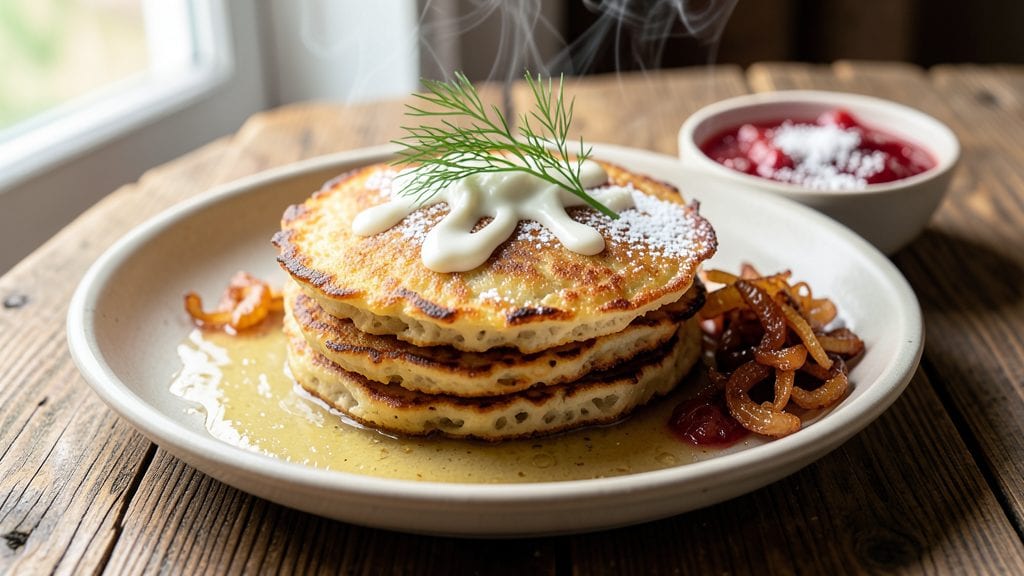
This authentic Polish potato pancake recipe delivers the crispy, golden crusts and vinegary tang you crave—just like the ones from Polish street markets. The secret lies in raw, grated potatoes (never mashed) and a precise frying technique that ensures perfect texture every time.
I've perfected this recipe after years of testing, and it's become a staple in my home for brunch or as a savory snack.
The traditional method calls for cold water to bind the potatoes, creating a sturdy yet tender base that fries up crispy on the outside while staying fluffy inside. A touch of vinegar in the batter adds that signature tang, while cornmeal in the mix guarantees a satisfying crunch.
This isn't just another potato pancake—it's a taste of Poland, served with sour cream and fresh chives.
What makes these pancakes truly special is their versatility—they're great as a hearty breakfast, a side dish for lunch, or even a snack with applesauce. The aroma of sizzling potato pancakes in a hot pan is enough to bring everyone to the table.
With just a few simple ingredients and careful technique, you'll achieve restaurant-quality results at home.
Serve them warm with a dollop of sour cream, a sprinkle of chives, or even a drizzle of honey for a sweet variation. This recipe is foolproof and delivers the authentic flavor and texture that make Polish potato pancakes a beloved classic. Let's get started on making them!
Ingredients for authentic polish potato pancake
Raw potatoes, vinegar tang, and cornmeal crunch—this is how Poland’s street markets make golden potato pancakes.
| Ingredient | Amount | Notes |
|---|---|---|
| Russet Potatoes 🥔 | 2 ½ lb | Raw, peeled, grated (fine) |
| All-Purpose Flour 🌾 | ¼ cup | For binding batter |
| Fine Cornmeal 🌽 | ¼ cup | Yellow or white |
| White Vinegar 💧 | 1 tbsp | For tangy flavor |
| Large Eggs 🥚 | 1 whole | Beaten for structure |
| Salt 🧂 | 1 tsp | Kosher or sea salt |
| Black Pepper 🌶️ | ½ tsp | Freshly ground |
| Vegetable Oil 🫒 | 3 cups | For frying (peanut oil preferred) |
| Fresh Chives 🌿 | ¼ cup | Chopped, for garnish |
| Sour Cream 🥛 | ½ cup | Full-fat for serving |
| Cold Water 💧 | ¼ cup | For binding potatoes |
The potatoes are non-negotiable—Russets are ideal for their starch content, but Yukon Golds work too. Peeled and grated by hand gives the best texture, but a food processor with the shredding blade speeds things up. Look for potatoes that are firm and free of sprouts. Costco or Trader Joe's usually carry them in bulk. The cornmeal should be fine, not coarse—Bob's Red Mill is my go-to brand for that perfect gritty texture. And don’t skip the vinegar; it’s what gives those pancakes that signature tang.
No cornmeal? Semolina or fine breadcrumbs work in a pinch, though the texture won’t be identical. Running short on vinegar? Lemon juice at half the amount adds brightness but lacks that classic sour note. The sour cream should be full-fat—Kroger’s brand or Trader Joe’s are reliable. For the oil, peanut oil is traditional, but vegetable oil works fine. If you’re frying in batches, keep the oil at 350°F—any hotter and they’ll burn before crisping. Fresh chives are best, but dried will work if you’re in a bind (use half the amount).
These pancakes are best served immediately, but you can hold them in a 200°F oven for up to 30 minutes if needed. They reheat poorly, so plan to fry just before serving. Store any leftovers in an airtight container for 3-4 days—though they’re so good, you’ll likely devour them all. For freezing, arrange them on a tray first to prevent sticking, then transfer to a bag. They’ll keep for 2-3 months, though texture softens slightly after thawing.
Why You'll Love This Recipe
- I’ll be real: Russet potatoes and flour are cheap, and this recipe makes enough for leftovers that taste just as good reheated the next day. Double the batch, freeze half, and you’ve got a budget-friendly side dish ready for whenever cravings hit—or when you’re too tired to cook.
- No Fuss, No Mess: I swear by this recipe because it’s the kind of dish that forgives mistakes—grate those potatoes uneven, skip measuring the flour exactly, even burn one side (we’ve all been there). The vinegar and egg bind everything together so well, you’ll end up with golden, crispy pancakes without the fuss of perfecting a batter.
- That Crispy-Creamy Magic: Honestly, the texture is what makes this recipe special. The cornmeal gives it that satisfying crunch on the outside, while the inside stays tender—like a hug from your favorite comfort food. The vinegar in the batter cuts through the richness, keeping every bite bright and balanced.
- Weeknight to Potluck Star: Between us, these pancakes are my go-to for lazy dinners, game days, or even a last-minute potluck dish. Serve them with applesauce for breakfast, sour cream for lunch, or a fried egg on top for dinner. They’re the ultimate blank canvas that never lets you down.
Step-by-step instructions for authentic Polish potato pancake recipe
Master these precise techniques for golden, crispy potato pancakes with a perfect cornmeal crust and tangy vinegar bite.
Grate and Squeeze the Potatoes
Begin by peeling the 2.5 lb russet potatoes and grating them using the fine holes of a box grater. Place the shredded potatoes in a clean kitchen towel and gather the edges, then squeeze out all excess moisture. This step is crucial—wet potatoes create a gummy batter instead of crispy pancakes. I like to work in batches, squeezing each handful thoroughly before adding fresh grated potatoes to the towel.
For best results, use a microplane grater if you have one—it produces finer shreds that crisp up more evenly. Once you've squeezed out as much moisture as possible, transfer the potatoes to a large mixing bowl. The texture should resemble wet sand, with no visible liquid pooling at the bottom. If you're unsure whether you've removed enough moisture, press a handful firmly—if water drips out, squeeze again.
Mix the Batter with Precision
In the same bowl with the prepared potatoes, add the 0.25 cup all-purpose flour, 0.25 cup fine cornmeal, 1 tbsp white vinegar, 1 whole large egg (beaten), 1 tsp salt, and 0.5 tsp black pepper. Using a wooden spoon or rubber spatula, gently fold everything together just until combined. Be careful not to overmix—the batter should maintain a rustic, slightly lumpy texture. Overworking develops gluten and leads to dense, cakey pancakes instead of crispy ones.
Next, add the 0.25 cup cold water gradually while folding. The batter should hold together when pressed but still feel slightly crumbly. If it feels too wet, add a little more cornmeal; if too dry, add a splash more water. The ideal consistency resembles thick mashed potatoes that can be shaped into loose balls. This balance ensures proper binding during frying while maintaining crispiness. Let the batter rest for 10 minutes while you prepare the frying setup.
Heat the Oil for Perfect Frying
Fill a deep skillet or Dutch oven with 3 cups vegetable oil and heat over medium-high heat until it reaches 350°F on a deep-fry thermometer. If you don't have a thermometer, test the oil by dropping in a small piece of potato batter—it should sizzle vigorously and float to the surface within 10 seconds. The oil is ready when it shimmers but doesn't smoke excessively. Too-hot oil burns the outside before the inside cooks through, while oil that's too cool creates greasy pancakes.
Maintain this temperature throughout frying by adding small amounts of oil as needed. I keep a squeeze bottle of oil nearby for quick adjustments. The key is consistency—fluctuating temperatures lead to uneven cooking. Once the oil reaches temperature, reduce the heat slightly to maintain 350°F during frying. This precise temperature creates that signature crispy exterior while keeping the interior tender.
Fry the Pancakes to Golden Perfection
Using a large spoon or ice cream scoop, drop generous portions of batter into the hot oil, spacing them about 1 inch apart. Fry in batches to avoid overcrowding, which lowers the oil temperature. The pancakes should sizzle immediately and develop bubbles on the surface within 1-2 minutes. Flip them carefully using a slotted spatula when the undersides are golden brown and crispy, about 3-4 minutes per side.
For authentic Polish potato pancakes, I press down gently on each pancake during the first minute of frying—this prevents them from curling and ensures even contact with the hot oil. They're done when both sides are deep golden brown with crispy edges. Transfer the cooked pancakes to a paper towel-lined plate to drain excess oil. Work quickly but don't rush—each batch should cook through completely before adding more to the pan.
Serve with Traditional Garnishes
While the pancakes are still warm, arrange them on a serving platter and sprinkle generously with the 0.25 cup chopped fresh chives. The vibrant green color contrasts beautifully with the golden pancakes and adds a fresh, oniony note that complements the crispy texture. Serve immediately with the 0.5 cup sour cream on the side for dipping—this creamy accompaniment balances the crispy pancakes perfectly.
For an authentic touch, I like to serve these potato pancakes with a simple side of applesauce or a dollop of horseradish sauce. The combination of textures and temperatures—crispy pancakes, cool sour cream, and warm applesauce—makes each bite unforgettable. Remember, these pancakes are best enjoyed fresh while they're still crispy and hot. Leftovers can be reheated in a skillet for 2-3 minutes per side to restore their crispiness.
Pro Tips For Making Authentic Polish Potato Pancake
- GRATE THEM DRY: Russets hold more moisture than you’d think—after grating, squeeze out excess liquid by wrapping the shredded potatoes in a clean kitchen towel and pressing firmly for 5 minutes. I learned this the hard way when my first batch turned out soggy and gluey instead of crispy. No shortcut here—skip it, and your pancakes will lack that perfect golden crunch.
- USE CORNMEAL LIKE GLUE: Polish potato pancakes (placki ziemniaczane) need that cornmeal for structure, but don’t just sprinkle it in. Mix it directly into the shredded potatoes before adding flour—about 2 tablespoons per 2 cups of grated potato. It binds better and prevents the pancakes from falling apart when flipping. (Yes, even if the recipe says to add it later.)
- FLIP THEM FAST AND LOW: The first flip is the critical one—wait until the edges are deep golden brown (about 3-4 minutes per side), then slide them out with a thin spatula. After the second flip, lower the heat to medium-low and cook another 2-3 minutes. I used to rush the second side, and they’d end up greasy and undercooked. Patience here makes all the difference.
- SALT THE POTATOES BEFORE FRYING: While the grated potatoes sit in the bowl, sprinkle in ½ teaspoon of salt now—not after mixing everything. The salt draws out moisture and seasons the starch, which actually improves the crisp. I was skeptical until I tried it: the flavor is deeper, and the texture stays crispy longer. (Your future self will notice.)
Essential equipment for authentic polish potato pancake
Must-Have Frying Tools
First, invest in a deep skillet or Dutch oven with at least 10-inch diameter—I use a Lodge cast iron because it maintains even heat and develops a natural nonstick surface over time. The deep sides prevent oil splatter and allow you to fry multiple pancakes at once.
A deep-fry thermometer is non-negotiable for precise 350°F oil temperature control—I recommend the ThermoWorks Thermapen One for accuracy and durability. 🌡️
Essential Mixing Gear
For grating, a microplane grater or box grater with fine holes is essential—OXO Good Grips makes a great budget-friendly option. I also keep a clean kitchen towel nearby for squeezing moisture from the potatoes, as this step makes all the difference in crispiness.
A wooden spoon or rubber spatula prevents overmixing the batter while ensuring even distribution of ingredients. For measuring, a stainless steel measuring cup set (like Farberware) keeps your ingredients precise.
Oil Management Tools
Use peanut oil (traditional) or vegetable oil for frying—both work well, but peanut oil has a higher smoke point. Keep a squeeze bottle with a spout (like OXO Good Grips) handy to add small amounts of oil as needed to maintain 350°F.
A slotted spatula with silicone edges (such as Mercer Culinary) helps flip pancakes without breaking them, while a paper towel roll keeps fried pancakes warm and absorbs excess oil. 🫒
Optional Pro Upgrades
For large batches, a potato ricer (like OXO Good Grips) speeds up moisture removal compared to grating. A batter scoop (I use a Melamine ice cream scoop) ensures evenly sized pancakes.
For serving, a small bowl for sour cream and a chopping board with a built-in juicer (like OXO Good Grips) keeps chives prepped and ready. These extras elevate the process from homemade to restaurant-quality.
Budget-Friendly Swaps
No thermometer? Use the cold water test: Drop a small potato piece into oil—it should sizzle and float within 10 seconds. No Dutch oven? A heavy-bottomed stainless steel skillet works fine.
Skip the ricer and use a clean dish towel for squeezing. Even with basic tools, you can achieve authentic results—focus on technique over equipment. The key is patience and precise temperature control. 💡
Nutrition facts
Frequently asked questions
Why do traditional Polish potato pancakes need raw potatoes?
Raw potatoes create the signature crispy texture that fries can't match. When grated fresh, their starch converts to sugar during frying, creating a golden crust while keeping the inside tender. Pre-cooked or mashed potatoes lose this magic—resulting in dense, soggy pancakes instead of the crispy delight you crave.
Can I substitute cornmeal with something else?
Yes, but expect slight texture changes. For a closer match, use semolina or fine breadcrumbs (1:1 ratio). Cornmeal provides that signature gritty crunch and helps absorb excess moisture. If you're gluten-free, try almond flour or gluten-free cornmeal mix—just add an extra 1 tbsp of cold water to compensate for dryness.
How do I fix pancakes that turn out greasy instead of crispy?
Greasy pancakes usually mean the oil was too cool or the batter too wet. First, ensure your oil stays at 350°F—use a thermometer! Next, squeeze potatoes thoroughly until they resemble wet sand with no excess moisture. Let the batter rest 10 minutes before frying to help starches bind properly. For extra crispiness, pat pancakes dry with paper towels after frying.
What's the best way to reheat leftover potato pancakes?
Reheat in a dry skillet over medium heat for 2-3 minutes per side until golden again. Avoid microwaving—they'll turn rubbery. For oven reheating, place on a baking sheet at 400°F for 5-7 minutes—spritz lightly with oil first to restore crispiness. Leftovers keep well in an airtight container for 3-4 days, though they're best enjoyed fresh.