
Side Dishes
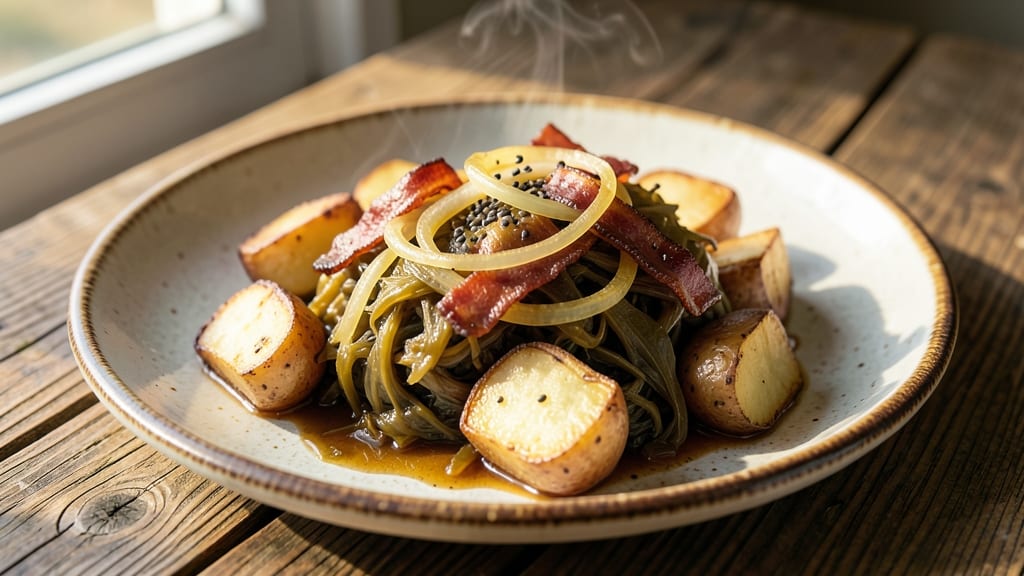
This traditional German sauerkraut with potatoes recipe delivers the perfect balance of tangy, sour flavors and hearty comfort in every bite. Growing up, my German neighbors would serve this dish at family gatherings, and it became a staple in our home—simple yet deeply satisfying.
The key lies in slow-cooking the sauerkraut until it mellows slightly, while crispy potatoes absorb all that rich, tangy goodness.
The beauty of this recipe is its simplicity: just a few ingredients, one skillet, and about 45 minutes of hands-off cooking. I always use smoked bacon for extra depth, but traditional versions call for salt pork or even just butter.
The caraway seeds add that unmistakable German touch, while the potatoes soak up the flavors beautifully. It’s the kind of dish that tastes even better the next day.
What you’ll end up with is a skillet full of tender potatoes and softened sauerkraut, where the sharp vinegar notes mellow into a complex, savory harmony. The aroma alone will have everyone at the table anticipating dinner.
This dish pairs perfectly with sausages, roasted meats, or even a crisp green salad for a complete meal.
Serve it warm with crusty bread to soak up every last bit of that flavorful juices. The leftovers reheat beautifully, making this a perfect make-ahead dish for busy weeknights or holiday feasts. Here’s how to make it!
Ingredients for german sauerkraut recipe with potato
Just a handful of pantry staples and one skillet for this German classic—smoky, tangy, and deeply comforting.
| Ingredient | Amount | Notes |
|---|---|---|
| Smoked Bacon 🥓 | 6 oz | Thick-cut preferred, chopped into pieces |
| Sauerkraut 🥬 | 1 ½ lb | Unrinsed, drained if too wet |
| Russet Potatoes 🥔 | 1 ½ lb | Cut into 1-inch chunks, peeled or unpeeled |
| Yellow Onion 🧅 | 1 whole | Medium, sliced into half-moons |
| Garlic Cloves 🧄 | 3 cloves | Minced, or 1 tsp garlic powder |
| Ground Caraway Seeds 🌿 | 1 tsp | Freshly ground for best flavor |
| Apple Cider Vinegar 🍏 | 2 tbsp | Or sub 1 tbsp white vinegar |
| Unsalted Butter 🧈 | 2 tbsp | Full-fat for best flavor |
| Salt 🧂 | 1 ½ tsp | Kosher or sea salt |
| Black Pepper 🌶️ | ½ tsp | Freshly cracked preferred |
| Fresh Thyme Leaves 🌿 | ¼ tsp | Or 1/4 tsp dried thyme |
| Bay Leaf 🍃 | 1 whole | Remove before serving |
| Chicken Broth 💧 | ½ cup | Low-sodium preferred |
The bacon is non-negotiable here—it adds that deep, smoky richness that ties everything together. Thick-cut from Costco is my go-to, but any smoked bacon works. If you're feeling traditional, salt pork or lardons swap in beautifully. Sauerkraut quality matters: look for jars with live cultures (no vinegar smell, just tangy). The caraway seeds? Buy whole and grind them fresh—they lose potency fast once ground. I grab mine at Penzeys, but the bulk bins at Whole Foods work too. And don't skip the potatoes—Russets hold up best to the long cooking time, but Yukon Golds add creaminess if you prefer.
No caraway seeds? Celery seeds at half the amount get you close, though it won't be traditional. Short on bacon? Double the butter and add a splash of smoked paprika. The vinegar is key for balancing the sauerkraut's acidity—apple cider vinegar adds a subtle sweetness, but white vinegar works in a pinch. Fresh thyme is ideal, but dried thyme at one-third the amount works if that's what you've got. The broth? Low-sodium is critical—you don't want to over-salt the whole dish. And if your sauerkraut is too wet, drain it well and pat it dry before adding to the skillet.
This tastes even better the next day—honestly, double the batch if you can. Keeps in the fridge for 4-5 days, and freezes beautifully for up to 3 months. I always make extra because it's perfect for sandwiches or as a side for sausages. Store in the skillet if you're using it again soon—the flavors meld even more overnight. And if you're serving it at a gathering, reheat gently on the stove with a splash of water to keep it moist.
Why You'll Love This Recipe
- One-Pan Magic: I swear by this for lazy nights—just toss everything on a sheet pan, pop it in the oven, and walk away. No chopping boards, no pots to scrub, just crispy potatoes and bacon that caramelize right alongside the sauerkraut.
- Smoky-Sour Perfection: That first bite? Crispy bacon meets tangy sauerkraut, with the potatoes soaking up all the smoky garlic flavor. It’s the kind of dish where every spoonful feels like a hug—especially when the onions get sweet and caramelized.
- Leftovers That Beg: Between us, this tastes better the next day. The flavors meld into something even richer, and it reheats like a dream. Pack it for lunch or serve it cold—either way, you’ll be the hero who brought dinner twice.
- Budget-Friendly Feast: I make this for six on a weeknight, and it costs less than takeout. Smoked bacon adds richness without breaking the bank, and sauerkraut stretches to feed a crowd. Honestly, it’s my go-to for when I need to impress without stressing.
Step-by-step instructions for German sauerkraut with potatoes
Here's how to create this hearty, tangy-sweet skillet dish with minimal fuss.
Cook the Smoked Bacon Until Crispy
Place a large skillet over medium heat and add the 6 oz smoked bacon in pieces. Let it cook undisturbed for 5-6 minutes until the edges turn golden brown and the fat begins to render out. This crispy bacon will add incredible depth of flavor to the dish.
Once the bacon is about 75% cooked, use tongs to flip the pieces and continue cooking for another 3-4 minutes until fully crispy. Remove the bacon with a slotted spoon and set aside on paper towels, leaving the rendered fat in the skillet. You should have about 2 tablespoons of bacon fat remaining—this is pure flavor gold.
Sauté Onion and Potatoes
In the same skillet (no need to wipe it clean—those bacon bits add flavor), add the 1 whole yellow onion sliced into half-moons and the 1.5 lb russet potatoes cut into 1-inch chunks. Cook over medium heat for 8-10 minutes, stirring occasionally, until the onions soften and the potatoes begin to develop golden spots.
This step is where the magic happens—the potatoes will absorb all that bacon fat and start to caramelize slightly. You'll know they're ready when they're tender enough to pierce with a fork but still hold their shape. Season with 1 teaspoon of the 1.5 teaspoons salt and 0.25 teaspoon of the 0.5 teaspoon black pepper while they cook.
Add Sauerkraut and Aromatics
Push the potato-onion mixture to one side of the skillet and add 2 tablespoons unsalted butter to the empty space. When the butter foams, add the 3 cloves minced garlic and cook for 30 seconds until fragrant. Then add the 1.5 lb sauerkraut, spreading it evenly over the potatoes.
Sprinkle the sauerkraut with the remaining 0.5 teaspoon salt and 0.25 teaspoon black pepper, plus the 1 teaspoon ground caraway seeds and 0.25 teaspoon fresh thyme leaves. Stir everything together gently, letting the sauerkraut absorb all those delicious flavors. Add the 2 tablespoons apple cider vinegar and the 1 whole bay leaf, then pour in the 0.5 cup chicken broth.
Simmer Until Potatoes Are Tender
Reduce heat to low and let the mixture simmer uncovered for 20-25 minutes, stirring occasionally. The potatoes should be fork-tender and the sauerkraut should be heated through. You might need to add a splash of water if it gets too dry—just enough to keep everything moist but not watery.
Here's the thing—don't rush this step. The flavors need time to meld together. You'll know it's ready when the potatoes are tender all the way through and the sauerkraut has softened slightly but still maintains its texture. The dish should smell absolutely amazing—smoky, tangy, and slightly sweet.
Finish and Serve
Remove the bay leaf and return the crispy bacon to the skillet, stirring everything together one last time. Taste and adjust seasoning if needed—you might want to add a bit more salt or vinegar to balance the flavors to your preference.
Serve immediately while hot, spooning the sauerkraut and potatoes directly from the skillet. This dish is perfect with crusty bread or as a side to roasted meats. The combination of crispy bacon, tender potatoes, and tangy sauerkraut creates a flavor profile that's both comforting and complex—exactly what German comfort food should be.
Pro Tips For Making German Sauerkraut Recipe With Potato
- CRISPCROSS POTATOES: Cook the potatoes in the bacon fat until they’re fork-tender before adding sauerkraut—about 15 minutes at medium-high heat. I used to rush this, and the potatoes ended up gummy; patience here makes all the difference.
- DRAIN AND RINSE SAUERKRAUT: Give the sauerkraut a quick drain and cold-water rinse to cut the sharpness—just 30 seconds in the colander. Skipping this step means your dish will taste like a pickle bomb, not a hearty German classic.
- LOW AND SLOW FINISH: Once everything’s in the pot, drop the heat to low and let it simmer uncovered for 10 minutes. This lets the flavors meld without turning the onions to mush or burning the garlic—trust me, your nose will thank you.
- SALT THE POTATOES FIRST: Toss the raw potatoes with a pinch of salt before cooking—it keeps them from turning gluey and helps them crisp up in the bacon fat. (Yes, even if you’re impatient like me.)
Storing and reheating this german sauerkraut recipe with potato
Refrigerator Storage
This dish tastes even better the next day, so I always make extra—honestly, it’s perfect for meal prep. Store in an airtight container (I use glass Pyrex with snap-on lids) for up to 4-5 days in the fridge.
The flavors meld beautifully overnight, deepening that smoky-tangy harmony. Just be sure to let it cool completely before storing to prevent condensation. 🥫
Freezer-Friendly
For longer storage, freeze portions in quart-sized freezer bags or airtight containers for up to 3 months. Leave 1-inch headspace to account for expansion, and squeeze out excess air to avoid freezer burn.
When ready to eat, thaw overnight in the fridge for even reheating. I often freeze leftovers in single-serving portions for quick lunches. ❄️
Stovetop Reheating
My preferred method is stovetop—it keeps the potatoes tender and prevents drying. Heat over medium-low heat for 10-12 minutes, stirring occasionally, and add 1-2 tablespoons of water or broth if it looks dry.
The residual bacon fat helps keep everything moist. Taste and adjust seasoning—you might need a pinch of salt or a splash of vinegar to restore balance. 🔥
Microwave Method
For a quick fix, cover a portion with a damp paper towel and microwave on 50% power for 2-3 minutes. Stir, then continue in 30-second intervals until heated through (165°F internal temp).
Avoid overcooking—microwaves can make sauerkraut mushy. Add a splash of water if needed to revive texture. ⚡
Oven Refresh
For a crispy top, transfer to an oven-safe skillet and bake at 350°F for 10-15 minutes, covered with foil, then uncovered for the last 2-3 minutes to crisp the edges.
This works great for serving at gatherings—just pop it in while you finish other dishes. The aroma alone will have everyone excited. 🍽️
Reheating Tips
Always reheat gently to preserve texture. If using leftovers, I like to add a pat of butter or a few extra bacon bits while warming to boost flavor.
Avoid high heat—it can make the potatoes gummy. And remember: this dish reheats even better than it tastes fresh! The tangy-sweet balance deepens with time. 💫
Nutrition facts
Frequently asked questions
Can I use store-bought sauerkraut for this recipe?
Store-bought sauerkraut works perfectly—just make sure it's unrinsed and still has those tangy, live cultures. If it's too wet, drain it well and pat it dry before cooking. The flavor will be slightly milder than homemade, but the texture and cooking process remain the same.
What kind of potatoes work best for this dish?
Russet potatoes are ideal because they hold up well to the long cooking time without turning mushy. For creamier results, Yukon Golds work beautifully too. Avoid waxy potatoes like red or fingerlings—they'll break apart and make the dish too watery. Always cut them into 1-inch chunks for even cooking.
How do I adjust the recipe for a vegetarian version?
Skip the bacon and boost the flavor with 2 extra tablespoons of butter and 1 teaspoon of smoked paprika. Add 1/4 cup of vegetable broth instead of chicken broth, and consider topping with crispy fried onions for texture. The caraway seeds and vinegar will still give that classic tangy depth.
Why does my sauerkraut taste too sharp after cooking?
Fresh sauerkraut can be very acidic, but the cooking process should mellow those flavors. If it's still too sharp, add 1-2 teaspoons of honey or brown sugar while simmering to balance the acidity. Alternatively, stir in 1/4 cup of apple cider** at the end to soften the tang. Don't overcook—just 20-25 minutes is enough to let flavors meld.
Can I make this in a slow cooker?
Yes! Cook the bacon separately, then add everything to the slow cooker on low for 4-5 hours or high for 2-3 hours. The potatoes will absorb the flavors beautifully, though they may be slightly softer. Stir occasionally and add a splash of broth if needed to keep it moist. The slow cooker method is perfect for hands-off cooking.