
Side Dishes
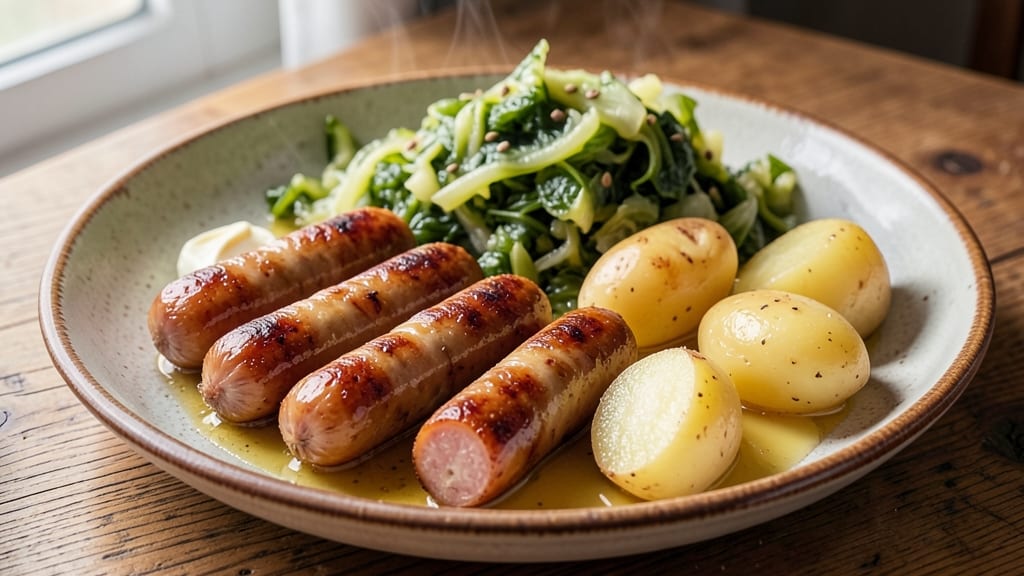
This German sausage, sauerkraut, and potatoes recipe delivers the comforting flavors of a traditional German Sunday dinner in one satisfying meal. The combination of smoky bratwurst, tangy sauerkraut, and hearty potatoes creates a dish that feels like home cooking at its finest.
I developed this recipe after years of perfecting the balance between crispy sausages and tender potatoes, all while keeping the sauerkraut's signature tang intact.
The key to this dish lies in its simplicity and traditional techniques. You'll grill or pan-sear the sausages until they develop a crispy exterior and juicy interior, while the sauerkraut simmers gently with onions and caraway seeds to deepen its flavor.
The potatoes—whether boiled, mashed, or roasted—provide the perfect starchy foundation to soak up all the savory juices. This recipe serves four and comes together in about 45 minutes, making it ideal for a family meal.
What you'll end up with is a plate that's equal parts comforting and impressive—golden sausages sliced into rounds, sauerkraut with caramelized onions and a hint of sweetness, and potatoes that are perfectly tender. The flavors meld beautifully, creating a dish that's both hearty and balanced.
Serve with a dollop of mustard or fresh herbs for extra brightness. This is the kind of meal that makes Sunday dinners feel special.
Whether you're hosting a gathering or simply craving a taste of Germany, this recipe delivers restaurant-quality results with minimal effort. The combination of textures and flavors ensures every bite is satisfying, while the traditional methods keep the dish authentic. Let's get cooking!
Ingredients for german sausage sauerkraut potato
Four bratwurst sausages, one pound of sauerkraut, and two pounds of russet potatoes—this German Sunday dinner comes together with minimal fuss.
| Ingredient | Amount | Notes |
|---|---|---|
| Bratwurst Sausages 🌭 | 4 whole | High-quality, fresh or frozen |
| Yellow Onions 🧅 | 1 whole | Medium size, thinly sliced |
| Caraway Seeds 🌿 | 1 tsp | Whole, lightly toasted |
| Unsalted Butter 🧈 | 2 tbsp | European-style preferred |
| Sauerkraut 🥬 | 1 lb | Drained, high-quality |
| Russet Potatoes 🥔 | 2 lbs | Medium size, peeled |
| Garlic Cloves 🧄 | 3 cloves | Fresh, minced |
| Dijon Mustard 🍯 | 1 tbsp | For serving |
| Fresh Thyme 🌿 | ¼ cup | Leaves only, chopped |
| Extra-Virgin Olive Oil 🫒 | 1 tbsp | For sautéing |
| Kosher Salt 🧂 | 1 ½ tsp | Diamond Crystal preferred |
| Black Peppercorns 🌶️ | ½ tsp | Freshly cracked |
| Fresh Parsley 🌿 | ¼ cup | Chopped, for garnish |
The bratwurst is the cornerstone of this dish, so prioritize quality. Johnsonville or Butcher's Choice sausages deliver consistent flavor and texture, but any high-quality, fresh bratwurst will work. If using frozen, thaw them overnight in the refrigerator to ensure even cooking. For the sauerkraut, Brauhaus or Reinhart brands provide the most authentic tang, though any well-drained sauerkraut from the refrigerated section will suffice. The caraway seeds should be whole and lightly toasted in a dry pan for 30 seconds before adding to the sauerkraut—this amplifies their aromatic depth. Potatoes should be peeled and cut into even-sized chunks to ensure uniform cooking.
No fresh thyme on hand? Dried thyme at one-third the amount works in a pinch, though fresh is preferred for its bright, herbal notes. Substituting red onions for yellow adds subtle sweetness, while shallots provide a more delicate flavor. For a vegetarian twist, replace bratwurst with hearty portobello mushrooms marinated in soy sauce and smoked paprika. The mustard can be swapped for whole-grain mustard or spicy brown mustard, depending on preference. If your sauerkraut lacks tang, add a splash of apple cider vinegar or a pinch of sugar to balance the acidity. The olive oil should be high-quality, as it carries the flavors of the caramelized onions and garlic.
Bratwurst can be prepped ahead and refrigerated for up to 2 days, but cook them fresh for optimal texture. Sauerkraut and potatoes both reheat beautifully—store them separately in airtight containers for up to 5 days. The sauerkraut mixture can be made a day ahead and reheated gently on the stove. For meal prep, assemble the complete dish and reheat covered at 350°F for 20 minutes. Garnish with fresh parsley just before serving to maintain vibrant color and freshness.
Why You'll Love This Recipe
- One-Pan Magic: I swear by this recipe when I’m too tired to scrub pots—just brown the bratwurst and onions in the same skillet you’ll use for the potatoes. The juices from the sausage sear into the pan, turning the crispy spuds into the star without extra effort.
- Caraway Kiss: That tiny sprinkle of caraway seeds? It’s the secret weapon. Earthy, warm, and just a little nutty—it cuts through the richness of the butter and sausage like a breath of fresh air. Honestly, I’ll fight anyone who says it’s "just" a spice.
- Weeknight to Weekend: This dish works everywhere. Throw it together for a lazy Tuesday, bring it to a potluck, or serve it at a picnic—it’s hearty enough for a cold day but light enough for a summer barbecue. (Yes, even on a Tuesday night.)
- Budget-Friendly Feast: Sauerkraut stretches a dollar, bratwurst feeds a crowd, and potatoes? They’re the ultimate pantry hero. Leftovers reheat beautifully, and the flavors only get better the next day—no sad, soggy meals here. My wallet thanks me every time.
Step-by-step instructions for German sausage, sauerkraut, and potatoes
A classic German Sunday dinner comes together with simple, satisfying techniques that build rich flavors layer by layer.
Parboil and Roast the Potatoes
Preheat your oven to 425°F. Peel the 2 lbs russet potatoes and cut them into 1-inch chunks. Place them in a large pot of cold, salted water (add 1 tsp kosher salt to the water) and bring to a boil. Parboil for 8 minutes until the edges begin to soften but the centers remain slightly firm.
Drain the potatoes thoroughly, then transfer them to a rimmed baking sheet. Toss them with 1 tbsp extra-virgin olive oil and 0.5 tsp black peppercorns, spreading them in a single layer. Roast for 25-30 minutes until golden brown and crispy on the edges, stirring halfway through for even browning. The potatoes should be tender when pierced with a fork but not falling apart.
Sauté Onions and Toast Caraway Seeds
While the potatoes roast, heat 2 tbsp unsalted butter in a large skillet over medium heat. Add the 1 whole yellow onions, sliced into ¼-inch strips, and cook for 8-10 minutes until softened and beginning to caramelize at the edges. Remove the onions from the skillet and set aside.
In the same skillet, add the 1 tsp caraway seeds and toast them for 30 seconds until fragrant. This releases their nutty aroma, which will infuse the entire dish. Add the 3 cloves garlic cloves, minced, and cook for 30 seconds until fragrant but not browned. Return the onions to the skillet and stir to combine.
Warm the Sauerkraut with Aromatics
In a separate large skillet, heat 1 tbsp extra-virgin olive oil over medium-low heat. Add the 1 lb sauerkraut, drained, and cook for 5 minutes to warm through. Stir in the sautéed onion mixture, 0.25 cup chopped fresh thyme, and 1.5 tsp kosher salt. Cook for an additional 5 minutes until the flavors meld and the sauerkraut is heated through. The sauerkraut should be tender but still retain its texture—overcooking will make it mushy.
Taste and adjust the seasoning if needed. The sauerkraut should be tangy, slightly sweet, and well-balanced with the caraway and thyme. Keep the skillet warm over low heat while you prepare the sausages.
Cook the Bratwurst to Golden Perfection
In a clean skillet, heat 1 tbsp extra-virgin olive oil over medium-high heat. Add the 4 whole bratwurst sausages and cook for 4-5 minutes per side until they develop a deep golden-brown crust and internal temperature reaches 160°F. The sausages should sizzle gently and release easily from the pan when ready to flip.
Remove the sausages from the skillet and let them rest for 5 minutes before slicing. This resting period ensures they hold together when sliced and allows the juices to redistribute. Slice them diagonally into ½-inch rounds and arrange them over the roasted potatoes.
Assemble and Serve with Dijon Mustard
Transfer the roasted potatoes to a serving platter and top them with the sliced bratwurst. Spoon the warm sauerkraut mixture over the sausages, ensuring each bite gets a balance of crispy potato, savory sausage, and tangy sauerkraut. Garnish with 0.25 cup chopped fresh parsley for a pop of color and freshness.
Serve immediately with 1 tbsp dijon mustard on the side for dipping or spreading. This classic German Sunday dinner is best enjoyed while everything is hot, with the sausages juicy, the potatoes crispy, and the sauerkraut perfectly seasoned. The combination of textures and flavors makes this dish hearty and deeply satisfying—ideal for a cozy family meal.
Pro Tips For Making German Sausage Sauerkraut Potato
- Sear the Sausages First: Hit the bratwurst in a cold pan over medium-high heat—no butter yet. Let them develop that deep brown crust for 3-4 minutes before you even think about adding onions. I used to skip this, and the flavor was always flat, like someone forgot to season the meat.
- Drain and Rinse Kraut: Sauerkraut’s juice is sour, but it’s also salty and can make your dish taste like a pickle factory. Drain the jar, then give the kraut a quick cold-water rinse and squeeze out excess moisture. Sounds weird, but it works—your potatoes won’t turn mushy, and the flavors stay balanced.
- Caramelize Onions Low and Slow: After browning the sausage, push them aside and cook the onions on low heat for 15-20 minutes until they’re golden and sweet. I was skeptical until I tried it—this is the thing that matters most for depth. Skip this, and you’re just eating a bland sausage and kraut sandwich.
- Butter the Potatoes Last: Toss the boiled potatoes in a dry pan first to get them crispy, then add 2 tablespoons of unsalted butter and a pinch of caraway seeds at the very end. This keeps them from turning greasy while letting the butter melt into every nook. (Yes, even if you’re impatient like me.)
Make-ahead tips for this german sausage sauerkraut potato
Sauerkraut Prep
Make the sauerkraut mixture a full day ahead—it tastes even better after flavors meld overnight. Drain the sauerkraut thoroughly, then combine it with caramelized onions, toasted caraway seeds, and thyme in a bowl. Store in an airtight container in the fridge.
When ready to cook, simply reheat gently in a skillet over low heat for 5-7 minutes, stirring occasionally. This method preserves the sauerkraut's texture while deepening its flavor. 🌱
Potato Make-Ahead
Boil the potatoes up to 2 days ahead—they reheat beautifully. After parboiling, store them in cold water in the fridge to prevent browning. When ready to roast, drain and pat dry before tossing with oil and pepper.
Reheat roasted potatoes at 350°F for 10-15 minutes until crispy again. For extra crispiness, broil for 2-3 minutes at the end. 🥔
Sausage Prep
Cook the bratwurst 1 day ahead if needed, but for best texture, grill or pan-sear them fresh. If prepping ahead, slice and store in an airtight container in the fridge for up to 2 days.
Reheat in a skillet over medium heat for 3-4 minutes until warmed through. To revive crispiness, broil for 1 minute before serving. 🌭
Complete Meal Assembly
Assemble the full dish 1-2 hours ahead for a stress-free meal. Store each component separately in airtight containers—potatoes, sauerkraut, and sausages. Reheat in the oven at 350°F for 20 minutes, covered with foil.
Garnish with fresh parsley just before serving to keep it vibrant. This method ensures everything stays hot and delicious. ⏰
Freezer-Friendly
Freeze the sauerkraut mixture and roasted potatoes up to 3 months for future meals. Thaw overnight in the fridge before reheating. The sausages freeze well too—cook them fresh or freeze pre-cooked slices.
When ready to serve, reheat all components separately and assemble as directed. This makes Sunday dinners effortless even on busy weeks. ❄️
Nutrition facts
Frequently asked questions
Can I substitute bratwurst with another type of German sausage?
Frankfurters or knockwurst work well, though bratwurst delivers the classic flavor. For a vegetarian option, try hearty portobello mushrooms marinated in soy sauce and smoked paprika. The key is maintaining the sausage's juicy texture and smoky profile to balance the tangy sauerkraut.
How do I fix sauerkraut that's too sour or bland?
For overly sour sauerkraut, add 1 tsp sugar or ½ tsp honey while reheating. If it's bland, boost flavor with extra caraway seeds or a splash of apple cider vinegar. The ideal balance is tangy with a hint of sweetness—taste as you cook and adjust gradually.
Can I make this dish in a slow cooker for hands-off cooking?
Yes! Brown the sausages first, then place them in the slow cooker with the sauerkraut and onions. Cook on low for 3-4 hours or high for 2 hours. For potatoes, parboil them, then add to the slow cooker with the sausages for the last 30 minutes to crisp up. The slow cooker keeps everything warm and tender.
What's the best way to reheat leftovers without drying out the sausages?
Reheat sausages in a skillet over medium-low heat for 3-4 minutes with a splash of water or broth. Cover potatoes with foil and warm at 350°F for 10 minutes. For sauerkraut, gently reheat in a skillet with a little butter. Avoid microwaving sausages—they'll turn rubbery.
Are there traditional German sides to pair with this dish?
Classic pairings include dark rye bread, buttered red cabbage, or creamy potato salad. For a lighter option, add a crisp green salad with a tangy vinaigrette. The key is balancing the richness of the sausages with fresh, acidic, or starchy elements.