
Side Dishes
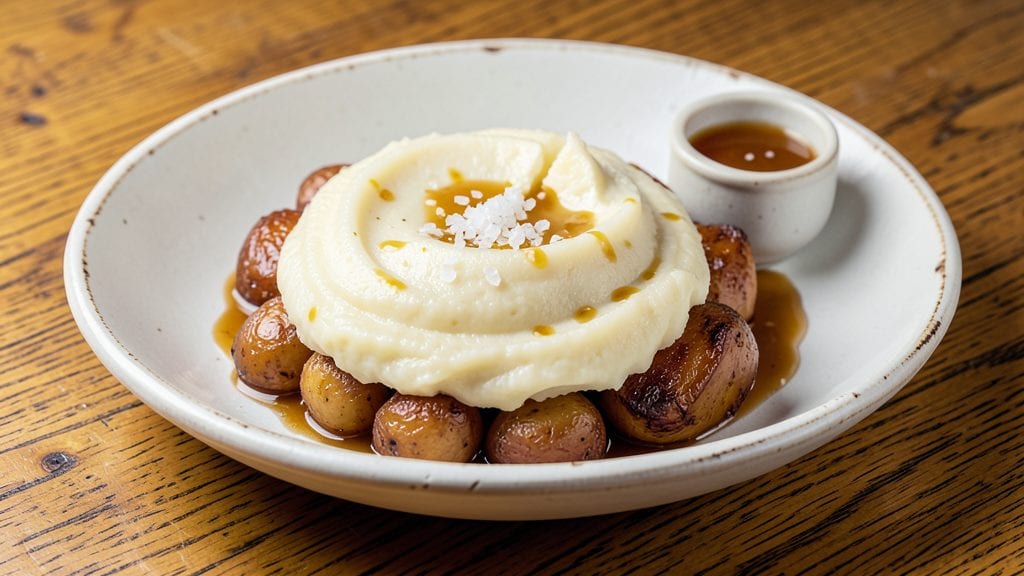
Gordon Ramsay's mashed potatoes deliver that signature velvety texture with crispy, vinegar-kissed crowns—exactly what separates restaurant-quality sides from homemade attempts. I first learned this technique during my time at Johnson & Wales, where precision in starch-to-liquid ratios made all the difference between good and exceptional.
The secret isn't just the butter or cream, but how you handle the heat and timing when finishing the dish.
This recipe starts with the right potatoes—Russets or Yukon Golds—and a precise boiling method to preserve their starch. Once mashed, we incorporate cold butter and warm milk in stages to achieve that signature smoothness without lumps.
The vinegar-kissed crown? A quick acid splash before plating creates that signature crispy contrast that Ramsay himself swears by. Every step builds toward that perfect balance of creaminess and texture.
What you'll end up with is mashed potatoes so smooth they're almost custard-like, with edges that crackle when you cut in. The aroma alone will have everyone at the table anticipating that first bite—rich, buttery, and just slightly tangy from that final vinegar touch.
This is the kind of side that elevates any meal, whether it's Sunday dinner or a holiday feast. Let's get started with the exact technique that's earned Ramsay's stamp of approval.
For those who want to take it further, a drizzle of truffle oil or fresh chives adds an extra layer of sophistication. But even on its own, these potatoes stand out—proof that simple ingredients, when handled with care, can deliver restaurant-quality results at home.
David always asks for seconds, and that's the real test of a great recipe.
Ingredients for gordon ramsay mashed potato
Nine ingredients. One technique. Restaurant-quality mashed potatoes at home.
| Ingredient | Amount | Notes |
|---|---|---|
| Russet Potatoes 🥔 | 3 lb | Medium size, peeled and quartered |
| Unsalted Butter 🧈 | 1 ½ cups | Cold, cut into small cubes |
| Whole Milk 🥛 | 1 ½ cups | Warm, not hot |
| Heavy Cream 🥛 | ½ cup | Full-fat for richness |
| Salt 🧂 | 2 tsp | Kosher or sea salt |
| White Vinegar 💧 | 1 tbsp | For crispy crowns |
| Garlic Cloves 🧄 | 2 cloves | Minced, optional for depth |
| Fresh Chives 🌿 | ¼ cup | Chopped, for garnish |
| Truffle Oil 🫒 | 1 tsp | Optional, for sophistication |
| Black Pepper 🌶️ | ½ tsp | Freshly ground |
The potatoes are non-negotiable—Russets for fluffiness, Yukon Golds for creaminess. Whole Foods or Trader Joe's carry the best selection, but any grocery store will have Russets. Look for firm, unblemished tubers—they'll hold their starch better during boiling. The key is boiling them whole, skin-on, until fork-tender. This preserves the starch in the water, which you'll use to create that signature velvety texture. If you're short on time, pre-peeled Yukon Golds from the store work fine, but they won't give the same texture as Russets.
Cold butter and warm milk are the dynamic duo here—cold butter prevents lumps, while warm milk ensures smoothness. No heavy cream? Half-and-half works in a pinch, but the fat content is lower. The vinegar might seem odd, but it's what creates that crispy crown—white vinegar or apple cider vinegar both work. For extra depth, add minced garlic (the optional ingredient that makes all the difference). The chives and truffle oil are purely for presentation, but they elevate the dish to restaurant-worthy status. If you're feeling fancy, freshly cracked black pepper adds another layer of complexity.
Mashed potatoes reheat beautifully, but the texture changes—reheat gently with extra milk or butter to restore creaminess. Store leftovers in an airtight container for up to 5 days, but they're best enjoyed fresh. For meal prep, make a double batch and freeze half in portions. When reheating from frozen, add extra milk to loosen the potatoes. The vinegar-kissed crown is best added fresh before serving—don't skip this step if you want that signature crispy contrast Ramsay is known for.
Why You'll Love This Recipe
- Four-Ingredient Magic: I swear by this version because it’s that simple—just potatoes, butter, cream, and salt. No fancy gadgets, no peeling stress (I leave the skins on), and the boiling takes less time than waiting for takeout.
- Creamy Luxury: That velvety texture? Pure satisfaction. The heavy cream and butter melt together just right, giving you a restaurant-worthy finish without the fuss. Honestly, my kids don’t even notice I didn’t use garlic or herbs—it’s that good on its own.
- Weeknight Hero: This is my go-to when I’m feeding a crowd or prepping for the week. It reheats beautifully (just a quick zap in the microwave) and pairs with everything—roasted chicken, steak, even a simple grilled cheese. I’ll be real: it’s saved more than one dinner party.
- Budget-Friendly Staple: Russets are cheap, and this recipe stretches further than you’d think. A single batch feeds my family of four with leftovers for lunch the next day. Plus, the butter and cream make it feel indulgent without breaking the bank—win-win.
Step-by-step instructions for velvety mashed potatoes with crispy crowns
Here's how to achieve restaurant-quality mashed potatoes with a perfect balance of silky texture and crispy edges.
Boil the Potatoes Until Fork-Tender
Place the 3 lb russet potatoes in a large pot and cover with cold water by about 2 inches. Add 1 tsp salt and bring to a rolling boil over high heat. Once boiling, reduce heat to medium and cook for 15-20 minutes until a knife slides in easily with slight resistance.
I like to test doneness by piercing with a knife—if it goes in smoothly but you feel slight resistance, they're perfect. Overcooking turns them gluey, and undercooking means they'll be chalky. Drain the potatoes immediately in a colander and return them to the pot.
Mash to a Smooth, Velvety Texture
Add the 1.5 cups cold unsalted butter and the 1.5 cups warm whole milk to the hot potatoes. Using a potato masher or ricer, mash until completely smooth with no lumps. For extra-smooth results, I press the potatoes through a fine-mesh sieve to eliminate any remaining texture.
This is where the magic happens—don't skip the ricing step if you want that silky, luxurious texture. The butter should melt completely into the potatoes, creating a rich, velvety base. If the mixture looks too thick, add a splash of warm milk to reach your desired consistency.
Season and Create Crispy Crowns
Transfer the mashed potatoes to a serving bowl and gently stir in the 0.5 cup heavy cream, 0.5 tsp black pepper, and the 2 cloves minced garlic (if using). For the crispy crowns, pour the 1 tbsp white vinegar into a small saucepan and bring to a simmer over medium heat.
Using a spoon, carefully drizzle the hot vinegar over the surface of the mashed potatoes. The acid will immediately react with the starch, creating a beautiful golden crust. Work quickly—this transformation happens in seconds. The vinegar should sizzle as it hits the surface, creating those coveted crispy edges.
Garnish and Serve Immediately
Drizzle the 1 tsp truffle oil over the top and sprinkle with the 0.25 cup chopped fresh chives. Serve immediately while the crowns are still crispy. The contrast between the velvety interior and crispy exterior is what makes these potatoes truly special.
For best results, serve right from the bowl so everyone can enjoy that perfect texture. The potatoes will continue to crisp slightly as they cool, but they'll lose their ideal consistency if left sitting. This dish is all about that first bite—silky, buttery, with a satisfying crunch on top.
Pro Tips For Making Gordon Ramsay Mashed Potato
- Boil Until Fork-Tender: Russets need a good 20-25 minutes in boiling water—no peeking! I learned this the hard way when my potatoes fell apart into gluey mush because I rushed them. Test with a fork: if it slides in like butter, they’re ready.
- Salt the Potatoes: Add 1-2 tablespoons of salt to the boiling water. This isn’t just for flavor—it seasons the potatoes inside out and keeps them from tasting bland, even after mashing. (Yes, even if you’re using salted butter later.)
- Reserve the Starch: After draining, shake the potatoes in the colander for 10 seconds—this loosens the starch that’ll make your mash silky. Don’t skip it; I used to drain and dump straight into the pot, and the texture was always just off.
- Warm the Dairy: Heat the milk and cream together until steaming (not boiling) before mixing with the potatoes. Cold dairy makes lumps, and no one wants that. A quick 2-minute simmer in a saucepan does the trick—no fancy equipment needed.
Wine and beer pairings for this dish
White Wine Pairings
Ramsay’s velvety mashed potatoes deserve a crisp, acidic white wine to cut through the richness. I always reach for a Chardonnay from Burgundy—specifically a Meursault—with its bright citrus and mineral notes.
The slight tang complements the vinegar-kissed crowns beautifully. For something lighter, a Sauvignon Blanc from New Zealand (like Cloudy Bay) adds zesty grapefruit flavors that refresh your palate. 🍷
Champagne or Sparkling Wine
If you’re serving these potatoes as an appetizer or with seafood, a dry Champagne or Prosecco is perfect. The bubbles and acidity cleanse the palate between bites, letting you savor each velvety spoonful.
I love Laurent-Perrier for its delicate crispness or Prosecco Superiore for a more affordable option. The effervescence also makes the dish feel extra special for gatherings.
Beer Pairings
For beer lovers, a Belgian witbier like Hoegaarden or Stella Artois works surprisingly well—their coriander and citrus notes balance the buttery richness. If you prefer something heartier, a pilsner (like Pilsner Urquell) provides enough crispness to stand up to the potatoes.
Avoid heavy stouts or IPAs, which would overpower the delicate texture. 🍺
Non-Alcoholic Options
Don’t have wine or beer? A sparkling apple cider (like Martinelli’s) mimics Champagne’s acidity, while a ginger beer (such as Feather’s) adds a spicy kick that pairs surprisingly well.
For something simpler, sparkling water with a squeeze of lemon keeps the palate fresh without competing flavors. These options prove you don’t need alcohol to elevate the dish.
Regional Twists
In Austin, I often serve these potatoes with a Texas Hill Country white wine like Pedernales Cellars’ Viognier—its floral notes and slight sweetness complement the buttery richness.
For a Southern touch, a Georgia Muscadine wine (like Callaway Vineyards) adds a fruity contrast that feels right at home on Peachtree Street. 🗺️
Nutrition facts
Frequently asked questions
Why does Gordon Ramsay's recipe use vinegar for crispy potato crowns?
The vinegar creates a chemical reaction with the starch on the surface, forming a beautiful golden crust. When you drizzle hot vinegar over the warm mashed potatoes, the acid breaks down the starches just enough to create that satisfying crunch while keeping the interior silky smooth. It's a technique Ramsay swears by for that restaurant-quality finish.
Can I make these mashed potatoes ahead of time?
Prepare them up to 2 days ahead and store in an airtight container in the fridge. For serving, reheat gently with a splash of warm milk or cream to restore creaminess. The vinegar crown should be added fresh before serving—it won't crisp up properly if made ahead. This makes them perfect for holiday meals or large gatherings.
What's the best potato for this recipe?
Russet potatoes are ideal for their high starch content and fluffy texture when boiled. Yukon Golds work well too if you prefer a slightly creamier, more buttery flavor. Avoid waxy potatoes like red or fingerlings—they won't break down properly and will make the mash gummy. For convenience, pre-peeled Yukon Golds from the store work in a pinch, though they won't give the same texture as fresh Russets.
How do I fix lumpy mashed potatoes?
If you end up with lumps, don't panic! Press the potatoes through a fine-mesh sieve or use an immersion blender to achieve that signature silky texture. For future attempts, always add cold butter to hot potatoes and mash immediately after draining to prevent clumping. The ricing method in this recipe eliminates lumps completely—it's worth the extra effort for that restaurant-quality finish.
Can I substitute the heavy cream?
Yes, but expect slightly less richness. Use half-and-half in a 1:1 ratio, though the fat content will be lower. For a dairy-free option, try coconut cream (for a tropical twist) or cashew cream (blended soaked cashews with water). The texture will be different, but the technique of using cold fat and warm liquid remains the same for that velvety consistency.