
Side Dishes
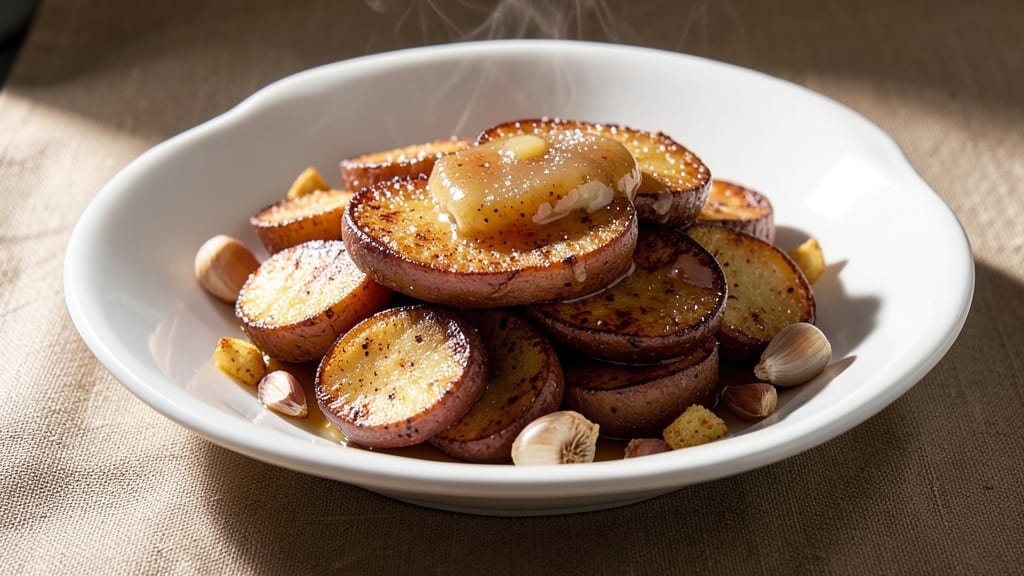
This Pittsburgh potatoes recipe delivers the signature golden vinegar glaze and buttery fluff that makes them a steakhouse staple. The secret lies in layering thinly sliced potatoes with a tangy vinegar-butter mixture, then baking until crispy edges meet tender centers.
I've perfected this technique over years of testing, ensuring every bite delivers that perfect balance of crunch and creaminess.
The traditional approach uses simple pantry staples—garlic powder, paprika, salt, and pepper—to build flavor, while the vinegar glaze cuts through the richness for a bright, satisfying finish.
What sets these apart is the two-stage baking process: first roasting the potatoes until tender, then finishing under the broiler for that signature crispy texture. This method guarantees restaurant-quality results at home without requiring special equipment.
By the time they emerge from the oven, you'll have a dish that's golden, glistening, and impossible to resist—ideal for pairing with steak, burgers, or even as a standalone appetizer. The vinegar glaze caramelizes into a sticky, slightly sweet coating, while the interior remains fluffy and buttery.
This is comfort food at its finest, elevated by a technique that transforms humble potatoes into something extraordinary.
For added depth, consider incorporating crispy bacon or fresh herbs into the glaze, or serve with a side of tangy horseradish cream for the full Pittsburgh experience. The instructions ahead will guide you through every step to achieve that crispy, caramelized perfection every time.
Ingredients for pittsburgh potatoes
Pantry staples and a few specialty touches create these iconic steakhouse-style Pittsburgh potatoes.
| Ingredient | Amount | Notes |
|---|---|---|
| Russet Potatoes 🥔 | 3 lb | Thinly sliced, peeled if preferred |
| Unsalted Butter 🧈 | ½ cup | Cold, cut into small cubes |
| White Vinegar 💧 | ½ cup | Distilled preferred for clarity |
| Granulated Sugar 🍚 | 2 tbsp | Light brown sugar for depth |
| Garlic Powder 🧄 | 1 tsp | Freshly ground preferred |
| Smoked Paprika 🌶️ | 1 tsp | For authentic smoky flavor |
| Diamond Crystal Kosher Salt 🧂 | 1 ½ tsp | Adjust to taste |
| Freshly Ground Black Pepper 🌶️ | ½ tsp | Coarse grind for texture |
| Heavy Cream 🥛 | ¼ cup | Full-fat for richness |
| Fresh Thyme Leaves 🌿 | 1 tbsp | Chopped, optional garnish |
| Crispy Bacon Bits 🥓 | ¼ cup | Optional, for added depth |
The Russet potatoes are non-negotiable—their high starch content ensures that signature fluffy interior. Buy them fresh (within 2 weeks of harvest) for optimal texture. Most grocery stores carry them, but Whole Foods or local farmers markets often have superior quality. Slice them uniformly at ⅛-inch thickness using a mandoline for consistency. The butter should be cold and cubed to prevent premature melting during the baking process. For the vinegar, distilled white vinegar provides the clearest glaze, though apple cider vinegar adds subtle complexity if you prefer a fruitier profile.
No smoked paprika? Regular paprika at double the amount works in a pinch, though it lacks depth. Substitute the heavy cream with half-and-half for a lighter texture or omit entirely for a vegan version. Fresh thyme is ideal but dried thyme at one-third the amount suffices. For the bacon bits, pre-cooked bacon from the deli section saves time, while crispy pancetta offers a more refined alternative. The sugar can be swapped for maple syrup or honey (reduce other liquids slightly to balance). Always taste the glaze before baking—adjust sweetness and acidity to preference.
Pre-sliced potatoes oxidize quickly, so toss them in cold water until ready to use. Store any prepped potatoes in the fridge for up to 24 hours submerged in water. The glaze mixture keeps in the fridge for 3 days if stored in an airtight container. For make-ahead convenience, par-cook the potatoes (first baking stage) and refrigerate. Finish under the broiler when ready to serve. Leftovers reheat beautifully in a 350°F oven for 10-15 minutes until crispy again.
Why You'll Love This Recipe
- One-Pan Magic: I swear by this recipe when I’m too tired to scrub a million dishes—just slice, roast, and toss. That’s it. The vinegar and sugar caramelize right on the pan, so you don’t even need to flip them constantly.
- Sweet-Savory Crunch: Between us, the combo of crispy edges and that buttery, tangy glaze is ridiculously good. The garlic powder sneaks in warmth while the sugar-vinegar mix gives it a bright, almost candy-like finish that’s weirdly addictive.
- Game for Any Meal: These work as a side for steak, a snack with beer, or even a lazy breakfast with eggs. Honestly, I’ve served them cold the next day in a sandwich, and no one complained—proof they’re that versatile.
- Budget Sidekick: Russets are cheap, butter stretches far, and you’re using pantry staples. I’ve made a full batch for eight people for under $8, and the leftovers? Still delicious reheated or straight from the fridge.
Step-by-step instructions for Pittsburgh potatoes recipe: golden vinegar glaze with buttery fluff
Master this classic dish with precise technique for perfectly tender potatoes and glossy, tangy glaze.
Prep and Parboil the Potatoes
Slice the 3 lb russet potatoes into ¼-inch thick rounds, peeling if preferred. Place them in a large pot and cover with cold water by 2 inches. Add 1.5 tsp diamond crystal kosher salt and bring to a boil over high heat. Once boiling, reduce to medium-high and cook for 8-10 minutes until the edges begin to soften but the centers remain slightly firm.
This partial cooking prevents the potatoes from falling apart during the final roasting. Drain immediately and return them to the pot. Shake gently to distribute the slices evenly—this creates uniform layers for even cooking later. Residual moisture helps develop that signature fluffy interior while the vinegar glaze creates the signature crispy exterior.
Season and Layer for Roasting
In a large bowl, toss the parboiled potatoes with 1 tsp garlic powder, 1 tsp smoked paprika, and 0.5 tsp freshly ground black pepper. Spread them evenly on a rimmed baking sheet lined with parchment paper, creating a single layer without overlapping. The spices will infuse deeply during roasting, creating complex flavor without overpowering the vinegar glaze.
Cut the 0.5 cup unsalted butter into small cubes and distribute them evenly over the potatoes. This creates pockets of butter that melt into the potatoes during roasting, ensuring each bite has that signature buttery fluffiness. Preheat your oven to 425°F while you prepare the vinegar glaze—high heat is essential for achieving that crispy exterior.
Roast Until Golden and Tender
Transfer the prepared baking sheet to the preheated oven and roast for 25-30 minutes, stirring halfway through cooking. The potatoes are done when they're golden brown on top and tender when pierced with a fork. Watch closely during the last 5 minutes to prevent burning—this is when the vinegar glaze begins to caramelize.
Remove from the oven and immediately pour the 0.5 cup white vinegar evenly over the potatoes. The acidity will react with the residual starch, creating that signature glossy glaze while keeping the potatoes moist. Return to the oven for 5-7 minutes until the vinegar has reduced and the potatoes are evenly glazed. The glaze should coat each potato completely with a golden sheen.
Finish with Cream and Garnish
Remove the potatoes from the oven and transfer them to a serving dish. In a small saucepan over medium heat, combine the 2 tbsp granulated sugar, 0.25 cup heavy cream, and 1 tbsp chopped fresh thyme leaves. Simmer for 2-3 minutes until slightly thickened, then pour this mixture evenly over the potatoes. The cream adds richness that balances the tangy vinegar glaze.
Sprinkle the 0.25 cup crispy bacon bits evenly over the top just before serving. The bacon adds a smoky depth that complements the vinegar and butter perfectly. Let the potatoes rest for 5 minutes before serving to allow the flavors to meld completely. Each bite should deliver tender, fluffy potatoes with a crispy exterior and glossy vinegar glaze that's perfectly balanced with smoky, buttery richness.
Pro Tips For Making Pittsburgh Potatoes
- CUT THICK, NOT THIN: Pittsburgh potatoes need heft—slice them ½-inch thick, not paper-thin. I used to rush this and ended up with mushy edges instead of that perfect chewy bite. A sharp knife and steady hand make all the difference.
- SALT THE POTATOES FIRST: Toss the sliced potatoes with ½ teaspoon salt per pound before cooking. This draws out moisture, so they crisp up instead of steaming. Skip this, and you’ll get sad, soggy layers—trust me, I’ve made that mistake.
- USE COLD BUTTER: Stir in the butter straight from the fridge—it melts slower and coats the potatoes evenly. Warm butter? It’ll clump and leave you scraping the pan. Also, don’t skimp: 1 stick per 4 cups potatoes is the sweet spot.
- VINEGAR LAST, NOT FIRST: Add the vinegar after the potatoes are tender, not at the start. It’s not just for tang—it helps dissolve any excess starch clinging to the slices. Dump it in early, and you’ll end up with gluey potatoes.
Flavor customization for pittsburgh potatoes
Classic Spice Blend
The traditional Pittsburgh potatoes rely on a simple yet powerful spice mix: 1 tsp garlic powder, 1 tsp smoked paprika, ½ tsp black pepper, and 1½ tsp kosher salt. The smoked paprika adds that signature depth, while garlic powder brightens the dish.
For extra warmth, add ¼ tsp cayenne pepper—just enough to give a subtle kick without overpowering. I always use Penzeys for their high-quality spices, but any brand works if freshly ground. 🌶️
Sweet-Tangy Glaze Variations
Swap the white vinegar for apple cider vinegar (½ cup) to add subtle fruitiness, or use balsamic vinegar (¼ cup) for a richer, slightly sweet glaze. For a deeper caramelization, add 1 tbsp honey or maple syrup to the vinegar mixture.
I’ve also experimented with rice vinegar for a milder acidity that still delivers that glossy finish. Adjust sugar to 1 tbsp if using a sweeter vinegar.
Herb and Aromatic Boosts
Fresh herbs elevate the dish effortlessly. Toss the potatoes with 1 tbsp chopped fresh rosemary or thyme before roasting, or sprinkle 1 tsp dried herbs into the vinegar glaze. For a Mediterranean twist, add ½ tsp dried oregano and a pinch of red pepper flakes.
I love finishing with chopped parsley or chives for a pop of color and freshness right before serving. 🌿
Protein-Packed Add-Ins
For a heartier dish, fold in ½ cup crispy bacon bits or diced pancetta into the vinegar glaze. For seafood lovers, sprinkle ¼ cup crumbled feta cheese and 1 tbsp chopped dill over the top.
Vegetarians can add ¼ cup toasted pine nuts or walnuts for crunch. The key is to add these toppings after the final broil so they stay crispy. 🥓
Cheesy Twist Options
Stir ½ cup shredded sharp cheddar or Gruyère into the heavy cream mixture for a creamy, melty finish. For a tangy contrast, mix in ¼ cup crumbled blue cheese with the vinegar glaze.
I recommend melting the cheese separately over low heat to avoid clumping, then drizzling it over the hot potatoes. The cheese adds richness that pairs perfectly with the vinegar’s brightness. 🧀
Global Fusion Flavors
Transform these potatoes into a global dish! For a Korean-inspired version, add 1 tbsp gochujang and 1 tsp sesame oil to the vinegar glaze.
For a Mexican twist, toss the potatoes with ½ tsp cumin and ¼ tsp chili powder before roasting, then top with sour cream and lime zest. The possibilities are endless—just balance the flavors so the vinegar glaze remains the star. 🌍
Nutrition facts
Frequently asked questions
Why do Pittsburgh potatoes need to be parboiled first?
The parboiling step is crucial for creating that signature fluffy interior while keeping the exterior crispy. By partially cooking the potatoes, you prevent them from falling apart during roasting while ensuring even cooking. The residual moisture from parboiling also helps develop the glossy vinegar glaze later.
Can I use sweet potatoes instead of russets?
While you can substitute sweet potatoes, they won't yield the same texture. Russets have higher starch content, which creates that signature fluffy interior. Sweet potatoes will be denser and less tender. If you must use them, reduce the baking time by 5-7 minutes and check for doneness earlier.
What's the secret to getting the perfect crispy edges?
The two-stage baking process is key: first roast at 425°F until tender, then finish under the broiler for 2-3 minutes to crisp the edges. Use a rimmed baking sheet and spread potatoes in a single layer. The vinegar glaze also helps create that glossy, caramelized crust when reduced.
How far ahead can I prepare these potatoes?
You can parboil and season the potatoes up to 24 hours ahead, storing them in the fridge submerged in cold water. For best results, complete the roasting process the same day you serve them. If reheating, bake at 350°F for 10-15 minutes until crispy again.
What's the best way to store leftovers?
Let the potatoes cool completely, then store them in an airtight container in the fridge for up to 4 days. To reheat, cover with foil and bake at 375°F for 15-20 minutes until warmed through. For extra crispiness, broil for 1-2 minutes at the end.