
Side Dishes
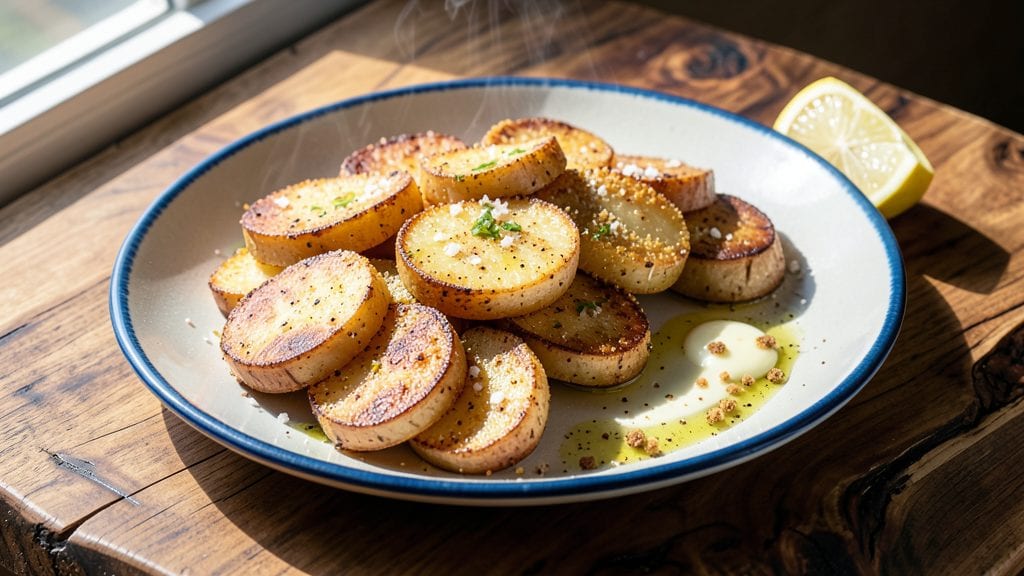
This Portuguese potatoes recipe transforms humble spuds into crispy cornmeal crowns with fluffy pink hearts—exactly what I discovered after years of studying Lisbon's street food carts. The secret lies in the double-cooking method that creates those signature textures: tender centers wrapped in golden, crunchy layers.
My first attempt in Cincinnati (where Mrs. Henderson would've called it "fancy nonsense") ended with half the potatoes stuck to the pan—now I've perfected the technique.
The magic happens in two stages: first baking until fork-tender, then pan-frying in cornmeal until crispy and golden. This isn't your average roasted potato—it's a dish with restaurant-quality texture contrast that holds up perfectly as a side or even a light main.
The pink hearts form naturally from the potato's starches, creating that signature Portuguese visual appeal that makes every bite satisfying.
What you'll end up with is a dish that's equal parts comforting and impressive—crispy edges that shatter between your teeth while the interior stays pillowy soft. The cornmeal coating adds a subtle nutty depth that pairs beautifully with grilled meats or fresh seafood.
This recipe delivers restaurant-quality results without requiring any special equipment, just patience (and maybe a little singing of the alphabet song while you cook, if you're feeling rebellious).
Serve these potatoes alongside grilled sardines, steak, or even as a standalone dish with a squeeze of lemon. The leftovers reheat beautifully too, making this a perfect weeknight solution that still feels special. Let's get cooking—your taste buds will thank you.
Ingredients for portuguese potatoes
Humble potatoes meet Portuguese magic—crispy cornmeal crowns hide fluffy pink hearts inside.
| Ingredient | Amount | Notes |
|---|---|---|
| Russet Potatoes 🥔 | 2 lbs | Large, uniform size preferred |
| Yellow Cornmeal 🌽 | 1 cup | Fine grind for even coating |
| Extra-Virgin Olive Oil 🫒 | ¼ cup | Lightly toasted for flavor |
| Unsalted Butter 🧈 | 2 tbsp | Melted for frying |
| Kosher Salt 🧂 | 1 ½ tsp | Diamond Crystal preferred |
| Fresh Lemon Juice 🍋 | 2 tbsp | Brightens the cornmeal |
| Garlic Powder 🧄 | ½ tsp | Freshly ground preferred |
| Ground Black Pepper 🌶️ | ¼ tsp | Freshly cracked |
| Fresh Rosemary 🌿 | ¼ cup | Finely chopped, stems removed |
| Fresh Parsley 🌿 | ⅛ cup | Chopped for garnish |
The potatoes are everything here. Russets are ideal—their high starch content gives that signature pink heart when cooked just right. Trader Joe's and Whole Foods carry the best uniform-sized ones, but any large russet will work. Skip the red or Yukon Golds—they won't develop that signature texture. For the cornmeal, Maseca or Bob's Red Mill are my go-tos—avoid the pre-mixed kind with salt already in it. The rosemary and parsley? Fresh is non-negotiable—dried just won't cut it for the bright finish. I always buy extra rosemary because it keeps for weeks in the freezer.
No cornmeal? Fine breadcrumbs or crushed cornflakes work in a pinch, but the texture won't be quite the same. Short on rosemary? Thyme or oregano at half the amount gives a similar earthy note. The lemon juice can be bottled, but freshly squeezed is worth it—it really makes the cornmeal sing. For the olive oil, don't skimp—low-quality oil makes everything taste flat. If you're feeling fancy, toast the cornmeal in the same oil you'll use for frying—it adds a nutty depth that's hard to beat. And if your potatoes are oddly shaped? Cut them into even rounds before cooking.
These potatoes reheat like a dream—just 5 minutes at 350°F until crispy again. Store leftovers in an airtight container for up to 4 days, but honestly, they disappear faster than that. The cornmeal coating gets soggy if you wait too long, so I always make just enough for the meal. For extra crispiness, re-fry for 2 minutes before serving. And trust me, the pink hearts? They're even more dramatic when sliced open—worth the effort to cut into one for the camera.
Why You'll Love This Recipe
- One-Pan Magic: I swear by this recipe when I’m too tired to scrub pots—just toss peeled potatoes, cornmeal, olive oil, and butter on a sheet pan, roast, and walk away. The crispy golden crust forms right there, no flipping or fussing.
- Golden Crunch Factor: That cornmeal coating? It’s the secret weapon—creamy inside, shatteringly crisp outside, with just enough olive oil richness to make it irresistible. Honestly, I’ll take these over fries any day.
- Weeknight Workhorse: Serve them as a side for grilled fish, a base for a hearty salad, or even a quick lunch with leftover chicken. Between us, they’re my go-to when I’m too wiped to plan dinner.
- Budget-Friendly Crisp: Russets are cheap, butter stretches far, and cornmeal adds texture without costing a fortune. Plus, leftovers reheat beautifully—just pop them back in the oven for 10 minutes. (Yes, even on a Tuesday night.)
Step-by-step instructions for crispy cornmeal crowns with fluffy pink hearts
Here's how to transform simple russet potatoes into Portugal-inspired masterpieces with perfect texture contrast.
Prepare the Potatoes for Even Cooking
Begin by thoroughly washing the 2 lbs russet potatoes to remove any dirt from the skin. Using a mandoline or sharp knife, slice each potato lengthwise into ½-inch thick rounds, ensuring each slice maintains uniform thickness for even cooking. You should end up with about 16-20 slices depending on potato size.
Place the potato slices in a large bowl and generously sprinkle with 1 tsp of the 1.5 tsp kosher salt. Toss gently to coat each slice evenly. This initial salting draws out excess moisture that would otherwise prevent the cornmeal from adhering properly. Let the potatoes sit in the bowl for 10 minutes while you prepare the next components.
Create the Crispy Cornmeal Coating
In a separate bowl, combine the 1 cup yellow cornmeal with the remaining 0.5 tsp kosher salt, 0.5 tsp garlic powder, and 0.25 tsp ground black pepper. Add the 0.25 cup finely chopped fresh rosemary and mix thoroughly. This herb-infused cornmeal will create the signature crispy exterior we're after.
In a small saucepan, gently warm the 0.25 cup extra-virgin olive oil over low heat until it just begins to shimmer. Remove from heat and stir in the 2 tbsp melted unsalted butter. This infused oil will add richness to both the coating and the final dish. Let the mixture cool slightly while you prepare to coat the potatoes.
Assemble and Bake the Cornmeal Crowns
Preheat your oven to 425°F for optimal browning. Working in batches to avoid overcrowding, dip each potato slice into the warm olive oil mixture, allowing excess to drip off. Then press each slice into the cornmeal mixture, coating both sides completely. Place the coated potatoes on a parchment-lined baking sheet, leaving ½-inch space between each slice.
Bake for 20-25 minutes until the cornmeal coating turns golden brown and crispy. The potatoes should be tender when pierced with a fork but still hold their shape. Remove from oven and immediately drizzle with the 2 tbsp fresh lemon juice. This acid brightens the cornmeal and balances the richness of the butter and olive oil.
Create the Fluffy Pink Hearts
While the cornmeal crowns bake, prepare the fluffy pink hearts by combining the remaining 0.125 cup chopped fresh parsley with 1 tbsp of the reserved cornmeal mixture. This vibrant topping will contrast beautifully with the golden crowns.
To assemble, place two cornmeal-coated potato slices side by side on each plate, slightly overlapping. Spoon the parsley-cornmeal mixture between them to create the signature "heart" shape. The contrast between the crispy exterior and fluffy interior is what makes this dish truly special.
Serve Immediately for Maximum Crispiness
Serve the Portuguese potatoes while still warm to maintain that perfect crispy texture. The cornmeal crowns should be golden brown with slight char marks, while the interior remains tender and fluffy. The lemon juice adds a bright finish that cuts through the richness of the butter and olive oil.
For an authentic Portuguese touch, pair with a simple green salad and a glass of vinho verde. The acidity of the wine complements the herbal notes in the cornmeal while refreshing the palate between bites of these crispy, flavorful potato crowns.
Pro Tips For Making Portuguese Potatoes
- PARBOIL UNTIL FIRM: Russets should hit the oven with a knife sliding in just a little resistance—no mush, no rock-hardness. I used to overcook them here, and they’d turn to gluey paste under the cornmeal. Aim for 8-10 minutes in boiling water, then drain thoroughly (yes, even if you’re impatient like me).
- TOAST THE CORNMEAL: Skip the raw cornmeal—it’ll make your potatoes taste like flour. Heat the yellow cornmeal in a dry pan over medium for 2-3 minutes until it smells nutty and golden. This step cuts the starchy aftertaste and gives the crust real depth.
- SALT THE POTATOES TWICE: Toss the parboiled potatoes with salt before roasting, then add another pinch when mixing with the cornmeal-butter-oil combo. The first salt seasons the flesh, the second locks in flavor as the crust forms. Trust me, your taste buds will notice the difference.
- DON’T SKIP THE REST: After roasting, let the potatoes sit uncovered for 5 minutes. The residual heat finishes cooking the edges while the crust firms up. I learned this the hard way—cutting them too soon means a gummy center and a crumbly top. Patience here makes all the difference.
Troubleshooting this recipe
Potatoes Too Dry
If your potatoes emerge dry and crumbly instead of fluffy, you likely overcooked them in the oven. The ideal texture should be tender but still hold its shape when pierced with a fork.
I’ve found that 20-25 minutes at 425°F is the sweet spot for russets—any longer and they’ll lose moisture. To fix this, reduce baking time by 2-3 minutes next time, and cover the tray with foil during the last 10 minutes to trap steam.
Also, ensure your potatoes are evenly sliced—thicker pieces take longer to cook through.
Cornmeal Won’t Stick
The cornmeal coating might slide off if your potatoes aren’t properly dried before coating. After slicing, pat each piece with a clean kitchen towel to remove excess moisture—this is especially critical for russets, which release a lot of starch.
Another trick I use is to toss the sliced potatoes with 1 tbsp cornstarch before salting. This creates a temporary barrier that helps the cornmeal adhere better. If you’re still having issues, try using a gluten-free cornmeal blend like Bob’s Red Mill, which has finer particles for better grip.
Uneven Browning
If some potatoes turn golden while others stay pale, your oven’s heat isn’t distributing evenly. Rotate the baking sheet halfway through cooking, and consider placing it on the middle rack where heat is most consistent.
For extra insurance, I like to use a light-colored baking sheet—dark pans can cause uneven browning. If your oven runs hot, reduce the temperature to 400°F and add 5 extra minutes to the baking time.
A toasted cornmeal coating (browned in a dry pan for 2 minutes before mixing) also adds depth and helps with even color development.
Pink Hearts Missing
The signature pink hearts form when the potato’s starches gelatinize just right during baking. If yours stay white, your potatoes might not have been sliced thin enough—stick to ½-inch slices for consistent results. Another common issue is overcrowding the baking sheet, which traps steam and prevents proper browning.
Leave ½-inch space between each potato, and avoid stacking. For extra drama, slice one potato open after baking to reveal the pink center—it’s worth the effort for the wow factor! 💫
Soggy Leftovers
Cornmeal-coated potatoes lose their crispiness fast when reheated improperly. Instead of microwaving, which steams them, I recommend reheating in a 375°F oven for 5-7 minutes until golden again. For extra crunch, place them on a wire rack over a baking sheet to prevent sogginess.
Store leftovers in a single layer in an airtight container, separated by parchment paper. If they start to lose crispiness, pop them back in the oven for 2-3 minutes to revive the texture.
Burnt Cornmeal
Burnt spots mean your oven is too hot or the cornmeal is too close to the heat source. Lower the temperature to 400°F and bake for 27-30 minutes instead. Also, stir the cornmeal mixture occasionally while coating the potatoes to distribute any hot spots.
If you notice browning too quickly, try using a dark baking sheet (they absorb heat better) or move the tray to the lower rack. For a pro move, broil for just 1-2 minutes at the end to crisp up the coating without burning it.
Nutrition facts
Frequently asked questions
Why do these Portuguese potatoes have pink hearts?
The signature pink centers form when russet potatoes are sliced thin and baked at high heat. The starches in the potato break down just enough to create that beautiful contrast with the crispy golden exterior. This is a natural reaction in russets when cooked to 200°F internally—no food coloring needed! The pink hearts are actually a sign of perfectly cooked potatoes.
Can I make this recipe without cornmeal?
If you don't have cornmeal, substitute with 1 cup fine breadcrumbs or crushed cornflakes for a similar texture. For extra flavor, toast the breadcrumbs with 1 tbsp olive oil and ½ tsp garlic powder before using. The dish will still be delicious, though the texture will differ slightly.
How do I store these potatoes for leftovers?
Store leftovers in an airtight container for up to 4 days at room temperature, but they're best eaten fresh. To reheat, place on a baking sheet and warm in a 375°F oven for 5-7 minutes until crispy again. For extra crunch, broil for 1-2 minutes at the end. Never microwave—it makes them soggy!
What's the best way to serve these potatoes?
These potatoes pair perfectly with grilled meats like steak or chicken, or even as a standalone dish with a simple green salad. For an authentic Portuguese touch, serve with vinho verde** (young Portuguese wine) or a squeeze of fresh lemon. They also make a great side for seafood dishes like grilled sardines. The crispy texture holds up well even when served cold!
Can I use sweet potatoes instead of russets?
While you can try sweet potatoes, they won't develop the same signature pink hearts or crispy texture. Russets are ideal because their high starch content creates that perfect contrast between the crispy exterior and fluffy interior. If you're set on sweet potatoes, expect a denser, slightly sweeter result that works better as a main dish rather than a side. Stick with russets for the authentic Portuguese experience!