
Side Dishes
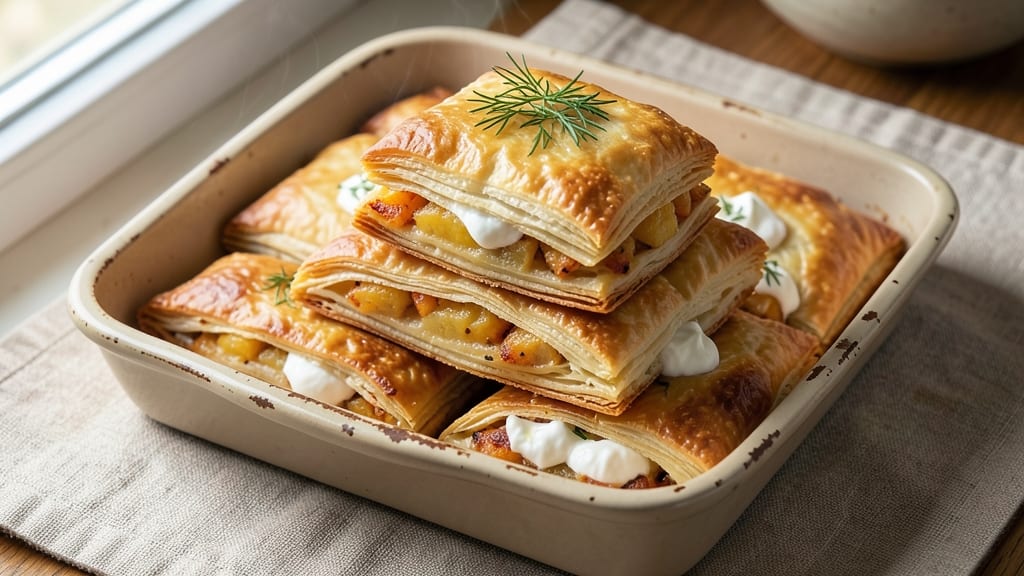
Mastering potato bourekas means achieving that perfect balance of flaky, golden layers and crispy edges that make every bite irresistible. This recipe delivers the authentic taste of Eastern European cuisine with a foolproof method for both the dough and filling.
The secret lies in layering thin sheets of dough with a creamy potato filling, then baking until the edges turn golden and the layers puff just enough to create that satisfying crunch.
What sets this recipe apart is the simplicity of the dough—just flour, water, and a touch of oil—that comes together in minutes and yields flaky layers that rival any bakery version.
The potato filling is equally straightforward: mashed potatoes mixed with sour cream, eggs, and a pinch of seasoning, creating a rich, creamy center that contrasts beautifully with the crispy exterior. This combination is what makes bourekas so universally loved.
By following this method, you'll end up with bourekas that are crispy on the outside and tender within, with each bite offering that perfect mix of textures and flavors.
The aroma alone as they bake will have everyone gathering around your kitchen, and the results are impressive enough to serve at gatherings or enjoy as a comforting side dish any night of the week.
For those looking to experiment, variations like adding cheese or spinach to the filling can take this dish even further. Whether you stick to the classic recipe or explore these twists, the key to success lies in precision and patience—two things that always pay off when it comes to baking.
Ingredients for potato bourekas
Fourteen ingredients for golden layers and crispy edges that rival bakery perfection.
| Ingredient | Amount | Notes |
|---|---|---|
| All-Purpose Flour 🌾 | 3 cups | Sifted for light texture |
| Unsalted Butter 🧈 | ½ cup | Cold, cubed for dough |
| Ice Water 💧 | ¾ cup | Chilled for elasticity |
| Russet Potatoes 🥔 | 2 lbs | Medium, peeled and boiled |
| Sour Cream 🥛 | ½ cup | Full-fat for creaminess |
| Large Eggs 🥚 | 2 whole | Room temperature |
| Salt 🧂 | 1 ½ tsp | Fine sea salt |
| Black Pepper 🌶️ | ½ tsp | Freshly ground |
| Nutmeg 🌿 | ¼ tsp | Freshly grated |
| Vegetable Oil 🫒 | ¼ cup | For brushing dough |
| Shredded Mozzarella Cheese 🧀 | 1 cup | Low-moisture, optional |
| Fresh Spinach 🍃 | 1 cup | Chopped, optional variation |
The flour and butter combination is non-negotiable for that signature flaky texture. King Arthur or Gold Medal flour yields the best results due to their high protein content, but any all-purpose will work. For the butter, Plugrá or Land O'Lakes unsalted are reliable choices—avoid salted to control the seasoning. Keep everything cold until mixing to prevent the dough from developing gluten too early. The potatoes should be boiled until tender but not falling apart—Yukon Golds work wonderfully, but Russets are more budget-friendly and hold their shape well.
No sour cream? Greek yogurt at half the amount works in a pinch, though the flavor won't be identical. The eggs must be room temperature to bind the filling properly—cold eggs create a dense texture. For the nutmeg, pre-ground is fine, but freshly grated adds depth. If you're adding cheese or spinach, low-moisture mozzarella prevents soggy layers, and fresh spinach should be well-drained to avoid excess moisture. The dough can be rolled out with a rolling pin or wine bottle—whatever's handy, as long as it's even.
Dough keeps wrapped in plastic for 2 days in the fridge or 3 months frozen. The filling can be prepped ahead and stored for 1 day in the fridge. For best results, bake bourekas immediately after assembling—pre-baking the dough sheets ensures they stay crispy. Leftovers reheat beautifully in a 350°F oven for 10-15 minutes, covered with foil to retain moisture.
Why You'll Love This Recipe
- No-Rolling Dough: I swear, this dough comes together faster than my coffee brews—just flour, butter, and ice water. No rolling pin, no fuss, and no sad, lumpy edges. The secret? Cutting the butter into the flour until it looks like coarse sand. Trust me, even my kids can handle this part.
- Sour Cream Magic: That creamy, tangy filling is what turns this into a thing. Russet potatoes get mashed with sour cream until it’s fluffy but not gluey—then folded into the dough like a cozy hug. The first bite? That crispy shell with a melt-in-your-mouth center? Ridiculously good.
- Weeknight Crowd-Pleaser: Honestly, this is my go-to when friends drop by unannounced. It’s handheld, shareable, and no one judges if you serve it straight from the oven. Plus, the leftovers reheat like a dream—just a quick zap in the microwave or oven until golden again. (Yes, even on a Tuesday night.)
- Pantry Staple Power: Between us, this recipe costs less than takeout and uses ingredients you already own. Russets stay fresh forever, flour’s always on hand, and butter? Well, we’re not counting that. It’s the kind of dish that makes you feel like you’re feeding a houseful without breaking the bank. My secret weapon.
Step-by-step instructions for potato bourekas recipe
Master these techniques and you'll achieve the perfect balance of crispy, flaky layers every time.
Prepare the Potato Filling
Peel the 2 lbs russet potatoes and cut them into even 1-inch cubes. Place them in a pot of cold, salted water and bring to a boil over medium-high heat. Once boiling, reduce to medium heat and cook for 12-15 minutes until the potatoes are fork-tender. Drain thoroughly and transfer to a clean bowl.
While still warm, mash the potatoes until smooth using a potato masher or fork. Stir in the 0.5 cup sour cream, 1.5 tsp salt, 0.5 tsp black pepper, and 0.25 tsp nutmeg until fully combined. The filling should be smooth but still hold its shape when pressed. Let it cool completely before using to prevent the dough from becoming soggy.
Make the Filo Dough
In a large bowl, combine the 3 cups all-purpose flour and 1.5 tsp salt. Cut the 0.5 cup unsalted butter into small cubes and add to the flour mixture. Using your fingers, work the butter into the flour until the mixture resembles coarse crumbs with pea-sized butter pieces remaining. This creates the signature flaky layers.
Gradually add the 0.75 cup ice water, 1 tablespoon at a time, mixing gently with a fork until the dough just comes together. The dough should be soft but not sticky—add more water if needed, but don't overwork it. Divide the dough into 4 equal portions and flatten each into a 6-inch circle about ¼-inch thick. Wrap each portion in plastic wrap and refrigerate for 30 minutes.
Assemble the Bourekas
Preheat your oven to 375°F. Unwrap one dough portion and place it on a lightly floured surface. Using a rolling pin, roll the dough into a 12-inch circle, keeping the edges slightly thicker than the center. Brush the entire surface lightly with vegetable oil, leaving a ½-inch border uncovered.
Spread ¼ of the potato filling evenly over the oiled portion of the dough, leaving the border clear. If using, sprinkle ¼ cup of the 1 cup fresh spinach and ¼ cup of the 1 cup shredded mozzarella cheese over the filling. Fold the uncovered border up and over the filling, then gently press the edges to seal. Repeat with remaining dough and filling.
Bake to Golden Perfection
Place the assembled bourekas on a parchment-lined baking sheet, seam-side down. Bake for 25-30 minutes until the edges are golden brown and the filling is heated through. Rotate the baking sheet halfway through for even browning. The bourekas are done when they're crispy on the outside and tender on the inside.
Remove from the oven and let cool for 5 minutes before slicing. Serve warm with a dollop of sour cream or a simple yogurt sauce. The key to success is maintaining the heat throughout the process—hot dough and hot filling ensure those perfect flaky layers and crispy edges you're after.
Pro Tips For Making Potato Bourekas
- Boil Potatoes Until Fork-Tender: Russets stay dry and crumbly if you undercook them—aim for a knife that slides in like butter. Test one: if it flattens with gentle pressure, they’re ready. Overcooking turns them to mush, and no one wants soggy bourekas.
- Chill Dough Before Rolling: Warm dough sticks like glue to the rolling pin. Wrap the log in plastic and refrigerate 30 minutes—it’ll firm up enough to handle without tearing. (Yes, even if you’re impatient like me.)
- Don’t Overmix the Filling: Mashed potatoes and sour cream are delicate—fold them just until combined, or they’ll get dense. A few lumps are fine; overworking them guarantees a heavy, gummy center. Think "rustic," not "perfect."
- Brush Layers with Melted Butter: Skip the water for brushing layers—melted butter (or a 50/50 butter-water mix) creates a crisp, golden crust. Brush generously between each layer, especially the top. It’s the thing that matters most for that bakery-style shine.
Storing and reheating your potato bourekas
Refrigerator Storage
Assembled bourekas store beautifully in the fridge for up to 3 days when wrapped tightly in plastic wrap or an airtight container. The key is to let them cool completely before sealing to prevent condensation.
I always place a paper towel between layers to absorb any moisture. When reheating, bake at 350°F for 10-15 minutes until the edges regain their crispiness.
Freezer Storage
For longer storage, freeze unbaked bourekas for up to 2 months. Wrap each individually in plastic wrap, then place in a freezer bag with all air removed. When ready to bake, thaw overnight in the fridge, then bake as directed—no need to thaw completely before baking.
The texture remains just as flaky and crispy when reheated properly. 🧊
Oven Reheating
My preferred method is reheating in a 375°F oven for 12-15 minutes on a parchment-lined tray. Cover loosely with aluminum foil during the first 5 minutes to prevent over-browning, then uncover to crisp the edges.
This method preserves the flaky layers and crispy exterior better than microwave methods. For extra crispiness, brush with a little vegetable oil before reheating.
Microwave Method
For quick reheating, use the microwave on medium power (50%) for 2-3 minutes, covered with a damp paper towel. This prevents drying but won't restore the crispy texture.
I only use this method for leftovers when I'm in a hurry—it's not ideal for serving guests. Always stir halfway through to ensure even heating.
Dough Prep Ahead
The dough itself can be made 2 days in advance and stored in the fridge, wrapped in plastic wrap. For freezing, shape the dough into portions and freeze for up to 3 months.
Thaw in the fridge overnight before rolling out. The filling, however, should be made fresh or stored separately for no more than 1 day to maintain its creamy texture. 💡
Serving Warm
Bourekas taste best when served warm, straight from the oven or reheated. The contrast of crispy edges and creamy filling is what makes them irresistible. Serve with a side of sour cream or a sprinkle of fresh dill for extra brightness.
If storing for later, reheat just before serving to preserve that restaurant-quality texture.
Nutrition facts
Frequently asked questions
Can I use store-bought phyllo dough instead of homemade?
Store-bought phyllo sheets work perfectly for this recipe. Simply layer 3-4 sheets per boureka, brushing each with melted butter or vegetable oil before adding the filling. The key is to keep the phyllo sheets covered with a damp towel while working to prevent drying. This shortcut saves time without sacrificing flavor or texture.
How do I prevent my bourekas from getting soggy?
Sogginess happens when moisture escapes the filling. To avoid this, cool the potato filling completely before using, and pat any excess moisture from ingredients like spinach. Also, brush the dough with oil before adding filling, and seal edges tightly. Bake immediately after assembling—never pre-bake the dough sheets separately.
Can I make potato bourekas with sweet potatoes instead?
Yes, but the texture and flavor will differ. Sweet potatoes have more moisture and natural sweetness, so you'll need to roast them first to remove excess liquid, then mash them thoroughly. Reduce the sour cream to ¼ cup and add ½ tsp cinnamon for a dessert-style variation. The dough and baking method remain the same.
What's the best way to make bourekas extra crispy?
For maximum crispiness, chill the dough for 30 minutes before rolling, and use a light brush of oil between dough layers. Bake at 375°F until edges are deep golden brown, then broil for 1-2 minutes at the end. Another trick is to bake on a preheated baking stone for even heat distribution.
Are potato bourekas gluten-free?
Traditional bourekas contain wheat flour, but you can make a gluten-free version using a 1:1 gluten-free flour blend like Bob's Red Mill. Replace the water with sparkling water or club soda for better texture. Note that gluten-free dough won't be as flaky, but the filling and assembly method remain identical.