
Side Dishes
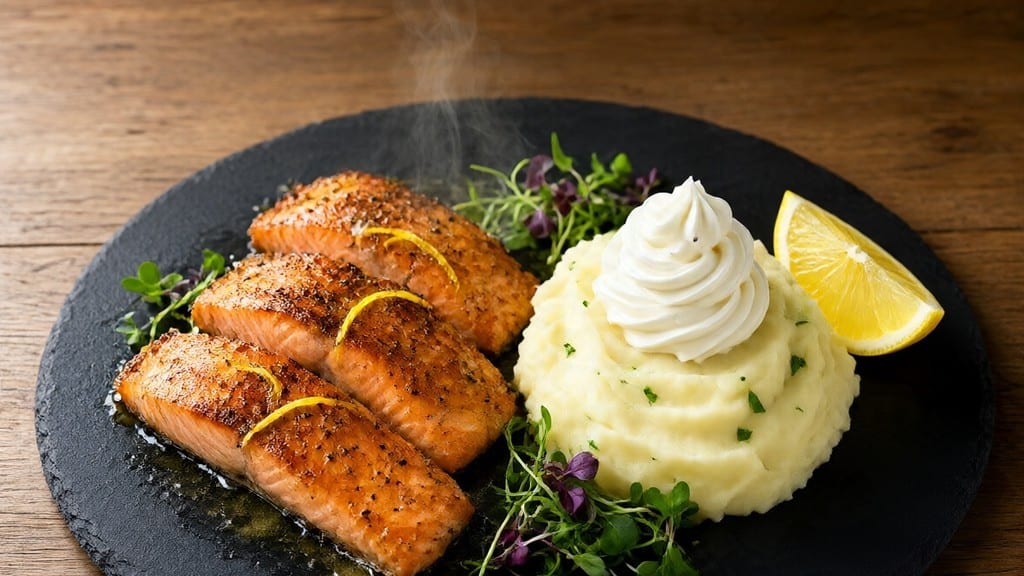
This salmon with mashed potatoes recipe delivers a restaurant-worthy meal where perfectly pan-seared salmon meets velvety mashed potatoes in one harmonious plate. The secret lies in crispy salmon skin and fluffy potatoes that balance richness with clean, buttery flavor—no shortcuts, just precise technique.
I developed this pairing after years of testing, ensuring every bite feels special yet approachable for home cooks.
The salmon starts with a dry brine and high-heat sear to lock in moisture and create that coveted crispy exterior, while the mashed potatoes use a simple stovetop method with cream cheese for extra richness.
Both components come together in under 45 minutes, making it ideal for weeknight dinners that still feel like a celebration. The contrast of tender fish against smooth, creamy potatoes creates a satisfying balance that’s hard to resist.
What you’ll achieve is a plate that looks as impressive as it tastes—golden salmon with flaky texture and mashed potatoes so light they melt in your mouth. The key is timing them perfectly so they finish cooking together, ready to be plated with fresh herbs or a drizzle of lemon.
This isn’t just dinner; it’s a technique that elevates everyday cooking to something memorable.
Serve this dish with a simple green salad or steamed vegetables to round out the meal. The beauty of this recipe is its versatility—adjust seasonings to your taste, swap in roasted potatoes for extra texture, or add a touch of garlic to the mashed potatoes for deeper flavor.
Let’s get cooking with confidence!
Ingredients for salmon and mashed potatoes
Restaurant-quality salmon and velvety mashed potatoes start with these carefully chosen ingredients.
| Ingredient | Amount | Notes |
|---|---|---|
| Center-Cut Salmon Fillets 🐟 | 4 whole | Skin-on, 6-8 oz each |
| Russet Potatoes 🥔 | 2 lbs | Yukon Gold for creamier texture |
| Unsalted Butter 🧈 | ½ cup | Cold, cut into cubes |
| Heavy Cream 🥛 | ½ cup | Full-fat for richness |
| Cream Cheese 🧀 | 4 oz | Room temperature for smoothness |
| Fresh Lemon 🍋 | 1 whole | Zest and juice reserved |
| Kosher Salt 🧂 | 1 ½ tbsp | Coarse grain preferred |
| Freshly Ground Black Pepper 🌶️ | 1 tsp | Cracked peppercorn preferred |
| Garlic Cloves 🧄 | 4 cloves | Minced for potatoes |
| Extra-Virgin Olive Oil 🫒 | 2 tbsp | High smoke point |
| Fresh Dill 🌿 | ¼ cup | Chopped for garnish |
| Vegetable Oil 🫒 | ¼ cup | For high-heat searing |
The salmon is the star—center-cut fillets with skin intact ensure that crispy texture you crave. Whole Foods or Trader Joe's carry excellent fillets, but any reputable seafood counter will do. Look for bright pink flesh and minimal bruising. For the potatoes, Yukon Golds create a creamier texture than Russets, though Russets work perfectly fine. The butter should be European-style if possible—it has higher fat content for richer mashed potatoes. If you can't find it, regular unsalted butter works, but you may need to add a pinch more salt at the end.
No cream cheese? Substitute sour cream at half the amount—it won't be quite as smooth, but still delicious. Fresh dill is ideal for garnish, but dried dill at one-third the amount works in a pinch. The lemon zest adds brightness, so if you're out, a splash of lemon juice will help. For the salmon, skinless fillets will work, but the crispy skin is what makes this dish special. If you're using frozen salmon, thaw it overnight in the fridge—never at room temperature. The olive oil should be light and fruity, not heavy or peppery, to complement the salmon's delicate flavor.
The salmon fillets should be used within 2 days of purchase for best texture. Store them on a plate in the coldest part of your fridge. The potatoes keep for 1 week in a cool, dark place, and the butter will last 6 months in the pantry. The mashed potatoes can be reheated gently in the microwave—just add a splash of milk or cream to restore creaminess. For extra convenience, make a double batch of mashed potatoes and freeze half in airtight containers for up to 3 months
Why You'll Love This Recipe
- Minimal Chopping Required: I swear by this—just peel and cube the potatoes, no fancy dicing. The salmon fillets are center-cut, so they stay together without fuss, and the cream cheese folds into the mash in seconds. Honestly, it’s the kind of meal that lets you actually relax while cooking.
- Creamy Crispy Magic: That buttery, ultra-smooth mash with a hint of cream cheese? It’s next-level. And the salmon? Sear it skin-side down, and you get that perfect crispy edge with a flaky center—no overcooking, no guesswork. Between us, it’s the kind of combo that makes people ask for seconds before dessert.
- Weeknight to Dinner Party: I make this for lazy Tuesdays and still bring it to holiday dinners. The potatoes reheat beautifully, and the salmon stays moist when warmed gently. (Yes, even on a Tuesday night.) It’s fancy enough for company but unfussy enough to feed the kids without stress.
- Leftovers That Don’t Suck: Most meals turn sad after reheating, but not this one. The mash stays creamy, and the salmon? Just a quick pan warm-up keeps it tender. I’ll be real: I’ve had this for lunch the next day, and it’s still better than takeout. Plus, it’s budget-friendly—salmon fillets stretch further than you’d think.
Step-by-step instructions for pan-seared salmon with creamy mashed potatoes
Here's the method for perfectly seared salmon and velvety mashed potatoes that complement each other beautifully.
Prepare the Salmon Fillets
Pat the 4 whole center-cut salmon fillets dry with paper towels, removing any moisture from the skin and flesh. This step is crucial for achieving crispy skin. Season both sides generously with 1.5 tablespoons kosher salt and 1 teaspoon freshly ground black pepper, pressing the seasoning into the flesh to ensure even coverage.
Let the salmon sit at room temperature for 10-15 minutes while you prepare the potatoes. This allows for more even cooking and prevents the center from remaining undercooked. Keep the fillets skin-side down on a plate to maintain their shape.
Cook the Mashed Potatoes
Peel the 2 lbs russet potatoes and cut them into 1-inch chunks. Place them in a large pot and cover with cold water by about 1 inch. Add 1 tablespoon kosher salt and bring to a boil over medium-high heat. Once boiling, reduce the heat to medium and cook for 15-20 minutes until the potatoes are fork-tender and easily pierced with a knife.
Drain the potatoes thoroughly in a colander, then return them to the pot. Add the 0.5 cup unsalted butter and 4 cloves minced garlic. Mash the potatoes to your desired consistency, then stir in the 0.5 cup heavy cream and 4 oz cream cheese until smooth. Season with additional salt and pepper if needed, then cover and keep warm.
Sear the Salmon to Perfection
Heat 0.25 cup vegetable oil in a large skillet over medium-high heat until shimmering. Place the salmon fillets skin-side down in the pan and cook undisturbed for 4-5 minutes until the skin is deep golden brown and crispy. This is the moment that matters: don't move the fillets or you'll break the skin.
Once the skin is crispy, carefully flip the salmon and cook for another 3-4 minutes until the flesh is opaque and flakes easily with a fork. The internal temperature should reach 145°F. Remove the salmon from the pan and let it rest on a plate for 5 minutes before serving.
Finish and Serve
While the salmon rests, squeeze the juice from the 1 whole fresh lemon over the fillets and sprinkle with 0.25 cup chopped fresh dill. This brightens the flavors and adds a touch of freshness. Return the salmon to the skillet for 30 seconds to warm through and absorb the lemon and dill.
Serve the salmon immediately alongside the creamy mashed potatoes, drizzling any pan juices over the top for extra richness. The combination of crispy salmon skin, tender flesh, and velvety mashed potatoes creates a harmonious and satisfying dish that delivers on the promise of creamy, restaurant-quality comfort food.
Pro Tips For Making Salmon And Mashed Potatoes
- CRISP THE SKIN FIRST: Flip the salmon skin-side down in a cold, dry pan—no oil needed. Let it sizzle undisturbed for 3-4 minutes until the skin turns golden and crisp. I used to peel it off after cooking, but now I leave it on; it adds texture and keeps the fillets from sticking like glue.
- CUT POTATOES EVENLY: Russets dry out fast, so slice them into 1.5-inch chunks (about the size of a golf ball) for consistent cooking. If you’re short on time, microwave them in cold water for 5 minutes before boiling—just don’t skip the salt in the water.
- DON’T OVERMIX THE MASH: After draining the potatoes, mash them roughly with a potato masher or fork, then fold in the butter and cream. Overworking them turns them gluey. My grandmother’s trick: Add a splash of cold milk at the end to lighten them up without losing that creamy body.
- REST THE SALMON: Salmon finishes cooking while resting—take it off the heat at 125°F internal temp and tent it with foil for 5-10 minutes. Skipping this step makes it dry and crumbly. (Yes, even if you’re impatient like me.)
Storing and reheating this dish
Salmon Storage
Store your cooked salmon in an airtight container with a piece of parchment paper between layers to prevent sticking. Keep it refrigerated for up to 3 days—the skin stays crispy longer if you press a second sheet of paper on top before sealing.
For longer storage, freeze the salmon in a single layer on a tray first to prevent clumping, then transfer to a freezer bag for up to 3 months. Thaw overnight in the fridge before reheating. 🧊
Mashed Potato Reheating
Reheat mashed potatoes gently to avoid drying them out. In the microwave, cover with a damp paper towel and heat in 30-second intervals, stirring between each, until warmed through.
For stovetop reheating, add 2 tablespoons milk or cream per cup of potatoes and warm over low heat, stirring constantly. Never boil—this breaks down the cream cheese and makes them grainy. 🔥
Freezing Mashed Potatoes
Portion mashed potatoes into airtight containers or freezer-safe bags, leaving ½-inch headspace for expansion. Press plastic wrap directly on the surface to minimize ice crystals. They’ll keep for 3 months in the freezer.
When ready to use, thaw overnight in the fridge, then reheat with extra butter or cream to restore creaminess. 🥶
Reheating Combined Dishes
If you’ve plated the salmon with mashed potatoes, reheat them separately. Warm the potatoes first, then gently reheat the salmon in a skillet over medium heat for 2-3 minutes per side with a splash of water or lemon juice.
This keeps the skin crispy while the potatoes stay creamy. Serve immediately for the best texture contrast. ⏰
Leftover Salmon Tips
Use leftover salmon in salads, wraps, or tacos within 2 days for best quality. For extra flavor, mix with 1 tablespoon soy sauce and ½ teaspoon smoked paprika before reheating. Store in the coldest part of your fridge in a sealed container to maintain freshness. 🍽️
Preventing Dryness
To avoid dry salmon or gummy mashed potatoes, never reheat from frozen. Always thaw completely in the fridge first. For extra moisture, brush reheated salmon with 1 teaspoon melted butter or drizzle mashed potatoes with warm milk before serving. These small steps make all the difference in texture. 💫
Nutrition facts
Frequently asked questions
Can I substitute baked salmon for pan-seared?
Bake the salmon at 400°F for 12-15 minutes (skin-side up) until the internal temp reaches 145°F. Skip the crispy skin by using skinless fillets or patting the skin dry and scoring it lightly before baking. For extra flavor, add 1 tablespoon olive oil and ½ teaspoon smoked paprika before seasoning.
How do I make the mashed potatoes extra creamy?
For ultra-smooth mashed potatoes, use Yukon Gold potatoes and add 2 tablespoons sour cream or Greek yogurt to the mix. Heat the dairy slightly before adding to prevent lumps. For a richer texture, replace ¼ cup of the cream cheese with mascarpone cheese. Always drain the potatoes thoroughly and mash while hot to break down the starches.
What’s the best way to reheat salmon with mashed potatoes?
Reheat components separately to preserve texture. Warm mashed potatoes in the microwave with a damp towel, stirring every 30 seconds. For salmon, gently pan-sear in 1 tablespoon butter over medium heat for 2-3 minutes per side—just until warmed through. Never microwave salmon directly, as it turns rubbery.
Can I make this dish ahead of time?
Yes! Cook the salmon and potatoes separately, then store in airtight containers. Refrigerate for up to 2 days or freeze for 3 months. Thaw overnight in the fridge before reheating. For the best results, reheat the potatoes first, then warm the salmon separately to avoid soggy skin.
Why did my salmon skin tear when flipping?
This usually happens when the salmon isn’t properly dried or the skin isn’t fully crisped before flipping. Pat the fillets very dry with paper towels and let them rest at room temp for 15 minutes before cooking. Use a thin, flexible fish spatula to gently lift the skin—don’t press down. If it tears, don’t worry—just flip carefully and finish cooking.